

Radio frequency identification (RFID) helps supply-chain teams capture the identity of goods as they move between manufacturers, distribution centers, carriers, and retailers. Instead of requiring a person to scan each visible barcode, a suitably designed RFID system can identify multiple tagged objects at defined checkpoints and send those observations to business software.
The practical value of RFID in supply chain management is not simply that a reader detects a tag. It is the ability to connect a verified physical movement to the right item, shipment, location, and business event. A receiving portal can help identify an arriving pallet; a conveyor checkpoint can support carton verification; and a handheld reader can investigate an inventory exception. Each use case needs a different combination of tags, readers, antennas, and software rules.
This guide follows RFID from factory dispatch to distribution and retail replenishment. It also explains how to select UHF RFID hardware, design read points, and integrate reliable data with warehouse management systems (WMS), enterprise resource planning (ERP), and manufacturing execution systems (MES).
RFID is an identification technology that uses radio communication between a reader and an electronic tag. In a typical passive UHF RFID deployment, the reader provides RF energy, communicates with compatible tags, and reports identifiers that software can associate with products, cartons, pallets, returnable containers, or assets.
A supply-chain RFID system commonly includes:
A tag can be detected without an optical line of sight when the RF conditions are suitable. However, successful reading still depends on tag placement, material, packaging, reader settings, antenna polarization, distance, and surrounding interference.
Passive UHF RFID is frequently used for item, carton, pallet, and container identification because compatible tags need no onboard battery. A passive tag is normally observed when it enters a reader's effective RF zone. It does not continuously report a shipment's GPS coordinates while the truck is travelling between facilities.
Active RFID and other real-time location systems can support different location requirements, but they introduce their own infrastructure, power, and cost considerations. GPS and cellular trackers serve another purpose: reporting the position of a vehicle or powered tracking device over a wider area. The right choice depends on whether the business needs an event at a doorway, a location within a facility, or transport visibility between sites.
| Decision factor | Passive UHF RFID | Barcode |
|---|---|---|
| Optical line of sight | Normally not required | Normally required |
| Multiple objects | Can inventory multiple compatible tags under suitable conditions | Individual or image-based scanning is usually needed |
| Automated dock or conveyor reading | Strong candidate for defined read zones | Possible with appropriate vision or fixed scanning equipment |
| Metal and liquid effects | Require RF-aware design and tag testing | Do not cause RFID-style detuning, but labels must be visible |
| Label and system cost | Typically higher and more integration-intensive | Often lower for straightforward manual scanning |
| Serialized identification | Supported when identities are assigned properly | Also supported with suitable serialized codes |
Both technologies can be valuable. For example, a supplier may print a barcode for human and exception-handling workflows while encoding the same business identity, or a related serialized identity, in an RFID tag.
The most useful way to plan RFID is to follow the movement of goods and identify the transitions where an automatic reading would improve a real operational decision.
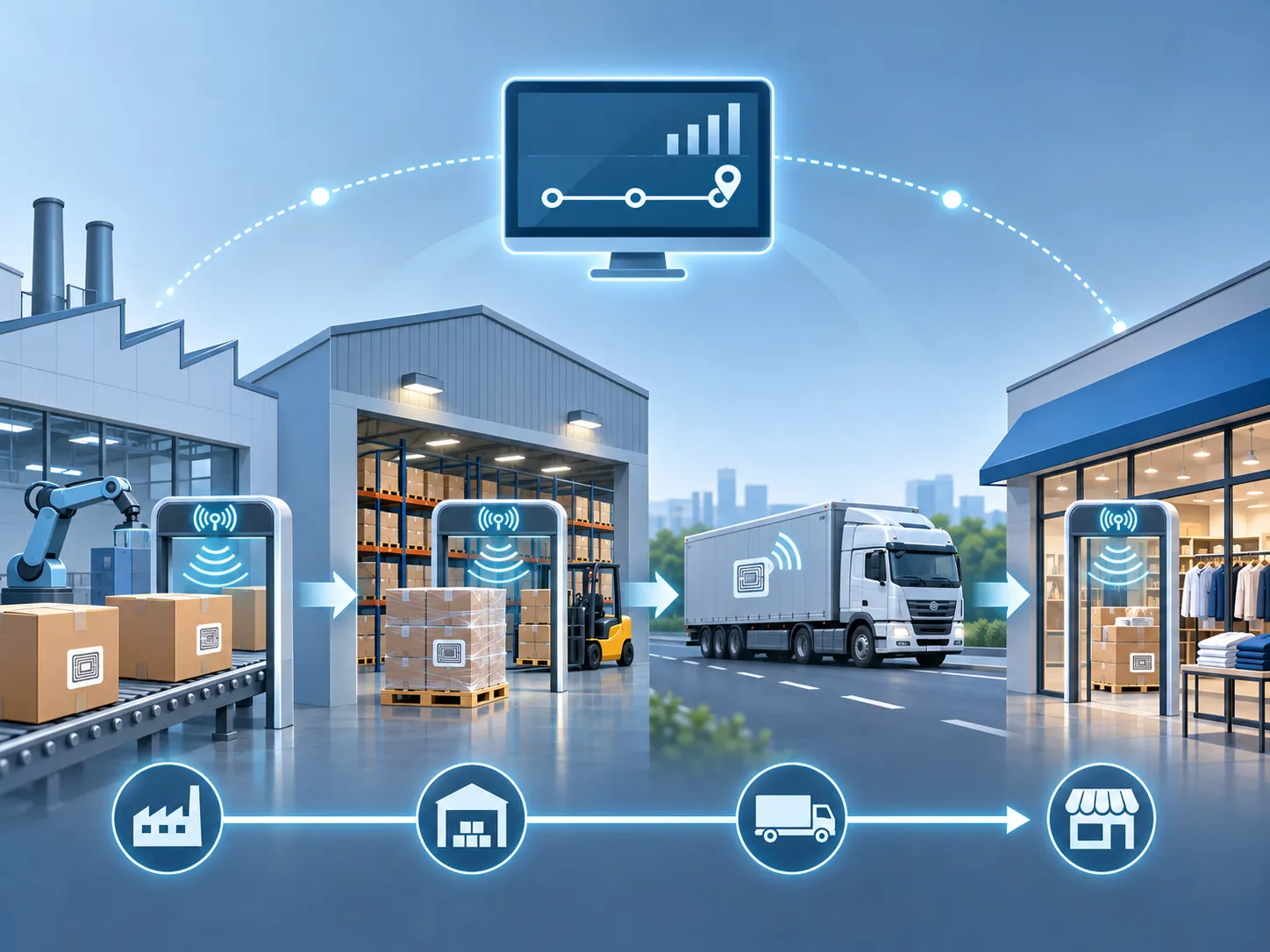
Goods can receive an RFID identity during production, packing, or final dispatch preparation. The identity may be associated with a product, serial number, batch, carton, pallet, or handling unit in the manufacturer's system. A reader at a finished-goods handoff point can help record when an identified unit leaves production or enters shipping.
The required tagging level must be defined first. If an entire pallet has one tag, the reader confirms the pallet identity. It cannot independently verify every item inside the pallet unless those items carry readable tags or the software maintains an accurate parent–child packing association.
For manufacturing environments, fixed readers and embedded UHF modules can be integrated into packaging stations, conveyors, or custom production equipment. See Syncotek's UHF RFID module options for embedded hardware architectures.
At a receiving door, a forklift moves a tagged pallet past installed antennas. The reader collects observed EPC identifiers; middleware filters the observations and associates them with the dock door and read window. The WMS can then compare the result with an expected advance shipping notice (ASN) or purchase order.
For instance, if a delivery is expected to contain six identified pallets and five expected pallet IDs are observed, the application can flag the unresolved sixth pallet for review. The software should not automatically infer that the shipment is complete merely because the portal read some tags.
The same approach can support carton-level receiving when the tagged objects, packaging density, and portal configuration have been validated for that level of identification.
Inside a distribution center, RFID can support transfer events between staging zones, sortation points, replenishment areas, or cross-dock lanes. A fixed reader may identify goods at a conveyor transition while a handheld reader supports exception searches and selective counts.
A useful read event should contain enough context for the business system to distinguish where an object was detected and what action was expected. Raw observations alone may not reliably determine movement direction. Direction detection may require sequential antennas, photoelectric sensors, conveyor signals, or additional process logic.
RFID at outbound doors helps compare the observed shipment identities against the planned loading list. Cross-docking operations can use receiving and dispatch reads to connect inbound handling units with outbound lanes or vehicles.
If several dock doors operate close together, readers may detect tags in adjacent staging areas. This is why practical installations use controlled antenna patterns, mounting positions, RF-power tuning, physical triggers, and event filtering. A long read range is not automatically an advantage when the project requires a narrow read zone.
Retail supply chains can use RFID at backroom receiving, inventory transfers, and selected replenishment checkpoints. Where item-level tagging is used, a store may reconcile individual products rather than relying only on case counts. Returns processing can also capture the identity of tagged goods, provided the returned item and the database record can be matched reliably.
RFID visibility is only as complete as the deployed read points and business data. A tag observed at a distribution center does not prove that it reached a retail shelf unless another appropriate event confirms that movement.
Three tagging levels are especially important for supply-chain planning:
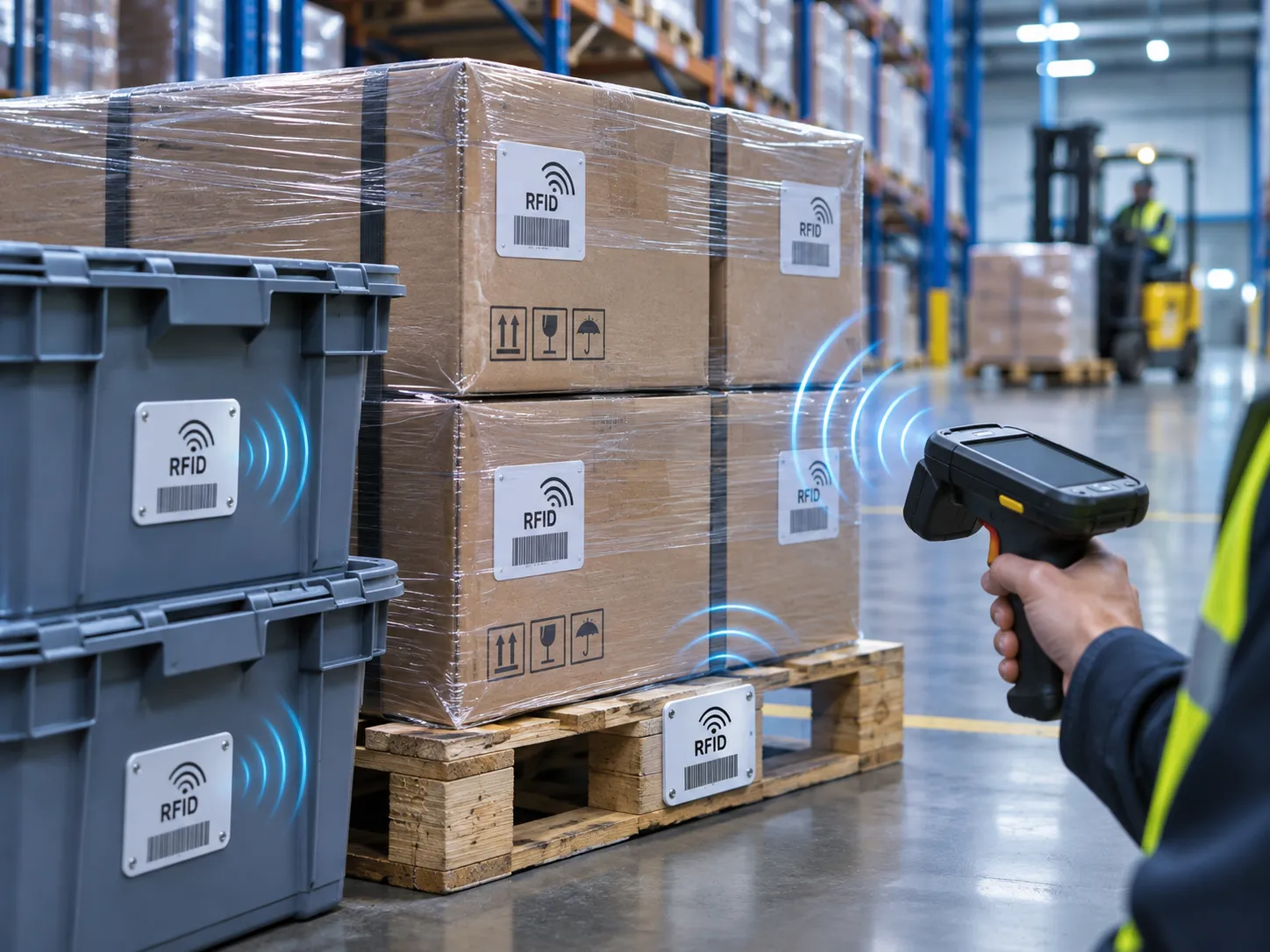
The correct level depends on what the business must verify independently. Using more tags than the workflow needs can increase encoding, labeling, and validation work. Using too few tags can leave gaps in visibility.
At a controlled read point, software can compare the observed EPC set with an expected shipment set. The possible outcomes include a match, an unexpected object, an unresolved expected object, or an ambiguous read that needs investigation. This logic can support faster exception handling, but should be validated using normal packaging, loading density, and movement speed.
Reusable totes, bins, pallets, racks, and containers may circulate between suppliers and plants. Durable UHF tags can help record dispatch, return, wash, repair, and storage events. The application must distinguish the reusable container identity from the temporary contents associated with it.
Tag selection is particularly important for metal racks, wet environments, outdoor exposure, and repeated mechanical handling. A conventional label intended for a dry cardboard carton is not necessarily appropriate for a returnable steel transport fixture.
Mobile UHF readers can support periodic counts, searches for missing tagged assets, and investigation of discrepancies between physical observations and WMS records. Fixed readers can provide recurring observations at selected movement checkpoints, but they do not necessarily establish the exact inventory of every shelf or room.
For a deeper warehouse-specific discussion, see RFID Inventory Management System for Warehouses and RFID Warehouse Inventory: Pros, Cons, Costs & ROI.
In manufacturing supply chains, a read at a supermarket rack, line-side checkpoint, or material handoff can provide evidence that a specific tagged container arrived. Business software can compare the event against a planned work order or replenishment request. Any automatic replenishment action should be based on validated events and established inventory rules.
A well-designed system can record exceptions such as an unexpected pallet passing a shipping door or a load unit appearing at the wrong staging zone. Traceability becomes more useful when the data associates an identity with time, location, business step, disposition, and any relevant shipment or order reference.
An effective architecture separates physical identification from business decisions. The reader captures signals; the application decides what those signals mean operationally.
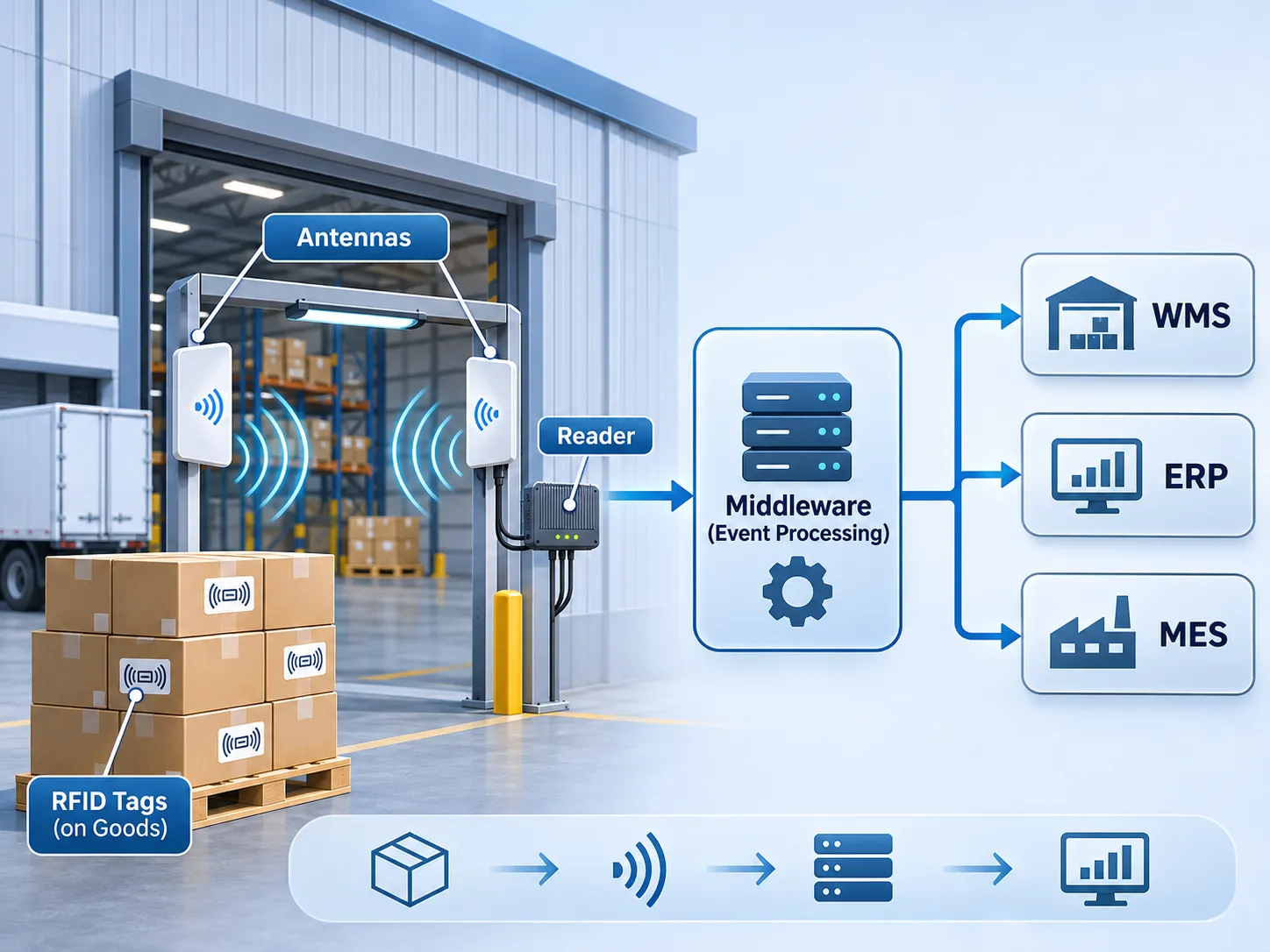
A typical architecture is:
Tagged goods → Reader antennas → UHF RFID reader → Middleware / edge application → WMS, ERP or MES → Verified business event
The reader may report an EPC, timestamp, antenna port, and other available metadata. Middleware may consolidate repeated observations, identify the read point, check against expected objects, and create an event the business application understands. WMS or ERP software then determines whether to receive, ship, transfer, hold, or flag an object.
A dock portal commonly uses a fixed RFID reader and directional external antennas positioned around a controlled loading lane. Depending on site geometry, additional components may include a photoelectric trigger, a PLC, a traffic light, a gate controller, or a local edge computer.
Portal planning should consider:
Syncotek's UHF fixed reader selection page covers multi-antenna reader options intended for this type of infrastructure. The final number of antennas must be determined by testing the actual lane and loads.
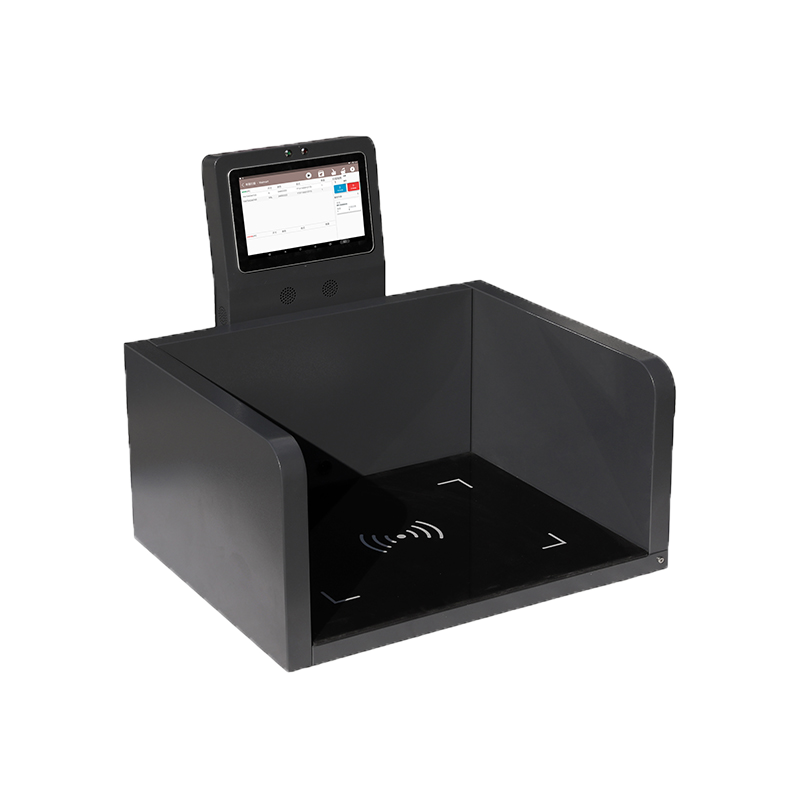
When cartons or grouped items pass through a controlled scanning area, an RFID tunnel may be more appropriate than an open dock portal. Enclosed or semi-enclosed tunnels can help constrain the reading geometry, although RF behavior still depends on contents and tag placement.
Syncotek's RFID Tunnel Reader family includes conveyor and operator-loaded architectures. An example is the SR-RUX237, a model intended for controlled carton reading. Published device capacities are not substitutes for validating real carton contents, packaging density, and operating speed.
The integration layer should translate RFID observations into business objects and actions. An EPC may be mapped to a serialized product, a carton, a pallet, or a reusable container. The application may then add a read-point identifier and the expected business process.
Consider an outbound verification workflow:
System designers should also plan for network interruption, event buffering, duplicate transactions, clock synchronization, manual overrides, and recovery after a restart. These requirements are often more important to operational reliability than maximum RF range.
For a breakdown of the infrastructure layers, read RFID System Components & Architecture.
The Electronic Product Code (EPC) can provide a machine-readable identity for a tagged object. Different identification schemes and data models may apply to products, logistics units, assets, and other objects. Identifier assignment must follow the scheme and business process chosen for the project.
GS1's EPCIS standard addresses the capture and sharing of visibility events across organizations. It provides a framework for describing what was involved, when and where an event occurred, why it happened in a business context, and—in EPCIS 2.0—relevant how or condition information where applicable. EPCIS is not the same thing as an RFID air-interface protocol, and it is not required for every internal warehouse project.
Official reference: GS1 EPCIS and CBV Standard and GS1's explanation of EPC and EPCIS.
Choose RFID hardware around the intended read point, not simply the longest advertised read range. An open dock, a narrow corridor, a moving conveyor, a mobile stock count, and an OEM sorting machine are different RF and integration problems.
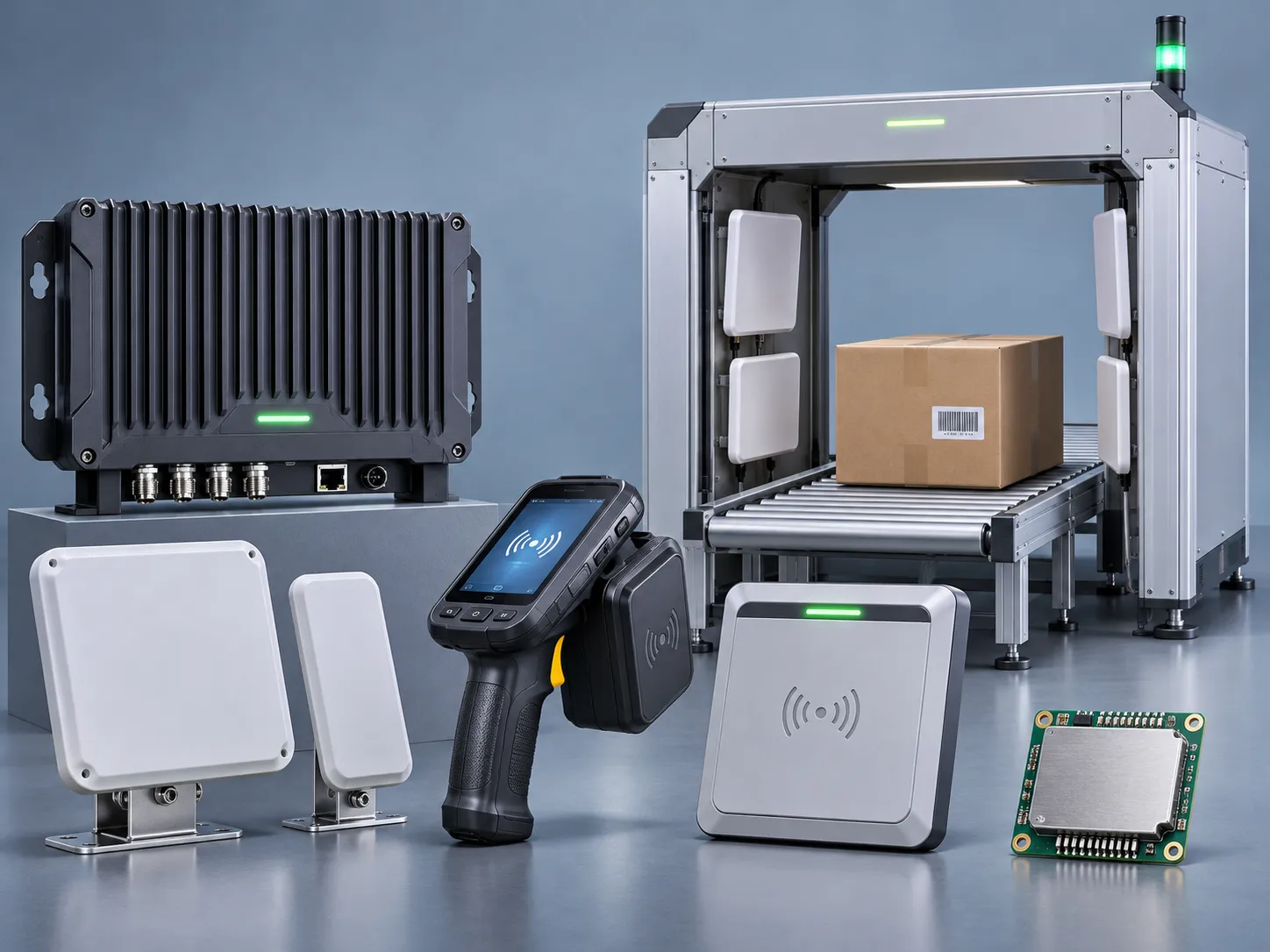
| Workflow | Recommended hardware architecture | Key questions |
|---|---|---|
| Wide loading dock or multi-antenna portal | UHF fixed reader with external antennas | How many antenna positions, what trigger, and how much adjacent-zone isolation? |
| Compact doorway or checkpoint | UHF integrated reader | Does the built-in antenna cover only the intended zone? |
| Aisle counting and exception search | Handheld UHF reader | What inventory software and connectivity are needed? |
| Controlled carton or conveyor verification | RFID tunnel reader | What carton dimensions, tag density, speed, and load pattern? |
| Custom logistics equipment or smart station | Embedded UHF RFID module | Which host interface, antenna design, SDK, and enclosure are required? |
| Pallets and reusable containers | Material-compatible UHF tags | Are surfaces plastic or metal, and what environmental conditions apply? |
A multi-port fixed reader can connect to external antennas arranged around a loading lane or process transition. Evaluate supported antenna ports, regulatory frequency profile, trigger support, communication interfaces, environmental protection, firmware, and the SDK or API required by the integrator.
Explore Syncotek UHF Fixed Readers and the broader RFID Reader portfolio for available hardware families.
An integrated reader combines the reading electronics and antenna in one enclosure. It can reduce the number of separate RF components at a small doorway or focused checkpoint. However, the integrated antenna pattern still needs to match the desired zone; a higher-gain antenna does not always produce better event accuracy.
See UHF Integrated Readers for warehouse portal and controlled-checkpoint options.
Handheld devices make sense when an operator must move between aisles, storage zones, trailers, or outdoor yards. They are especially useful for exceptions that a fixed read point cannot resolve. Confirm ergonomics, battery requirements, software platform, application interfaces, and how readings are associated with a physical location.
An RFID tunnel can provide a constrained scan area for cartons or batches of tagged goods. It should be selected according to actual carton size, throughput, tag population, conveyor movement, and software integration needs. For item-level verification inside a carton, test representative contents rather than assuming every tag will be detected.
OEM manufacturers may prefer a reader module that can be integrated into a sorting machine, smart cabinet, industrial workstation, or custom portal. Antenna layout, embedded host software, available communication interfaces, power requirements, and regulatory integration become part of the equipment design. Syncotek offers UHF RFID modules for OEM integration.
Tag choice depends on the object and deployment conditions. An adhesive inlay for a dry cardboard carton, an industrial tag for a returnable metal rack, and a rugged outdoor asset tag may have very different constructions. Tag size, placement, orientation, and the surrounding material all affect reading performance.
Antenna selection likewise involves more than gain. Evaluate polarization, beam width, mounting geometry, cable length, connector losses, reader power, and isolation from nearby zones. Regional UHF spectrum rules also determine the permitted reader configuration.
Metal can reflect RF energy and detune unsuitable tags; liquids and densely packed products may reduce available signal strength. Test the tags on actual merchandise and the final packed load, not only on an empty carton or in open air. Special-purpose tag constructions may be required.
A portal may identify tags stored in a nearby rack or passing through the next lane. Antenna orientation, controlled transmit power, shielding where appropriate, physical triggers, read windows, and software logic can help distinguish intended transactions from incidental observations.
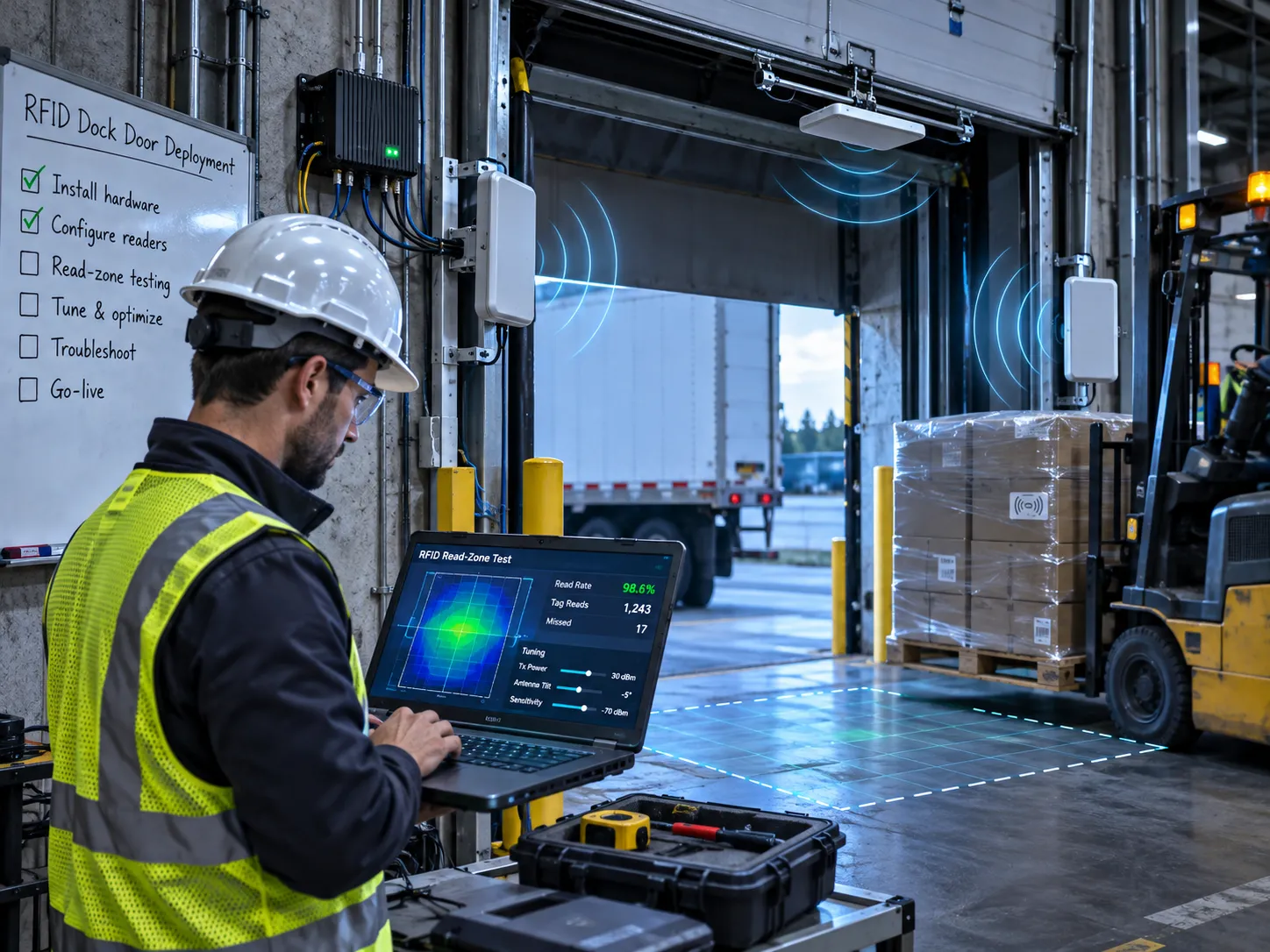
A tightly wrapped pallet may contain tags in many orientations, some close to metal or liquid products. Evaluate the worst-case packages, the number of tags, and movement speed during the pilot. Test missing and unwanted reads, not only successful demonstrations.
RFID readers can report the same identifier repeatedly while it remains in range. Middleware should consolidate those observations into the event required by the application. Conversely, a missed read should not automatically become a confirmed shipment, receipt, or inventory deduction.
Multiple nearby readers, long coaxial cables, difficult mounting locations, network outages, and regulatory differences can complicate deployment. Configure frequency bands and radiated power according to the location and hardware version. Document the final installation and plan retesting if the layout or packaging changes.
A phased rollout allows engineering and operations teams to establish whether RFID improves a real process before expanding to many doors or facilities.
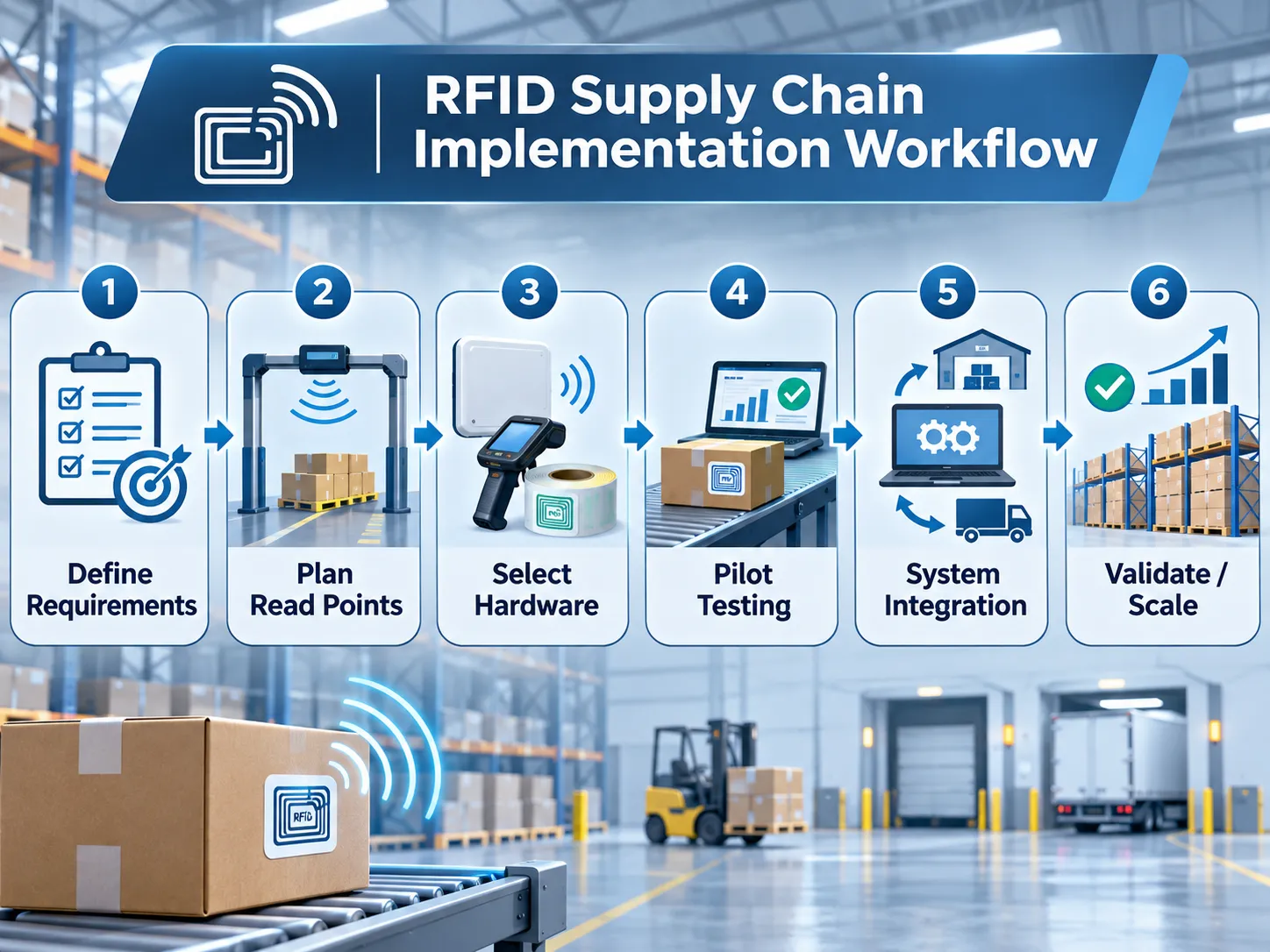
Decide whether the independent object is a serialized item, carton, pallet, tote, returnable rack, or other handling unit. Specify which movement or verification problem needs to be solved and what a successful result will look like.
Identify physical checkpoints, including manufacturing handoffs, receiving doors, staging lanes, conveyors, outbound doors, and return flows. For each point, record object speed, dimensions, tag orientation, nearby inventory, and operational triggers.
Choose suitable tags for actual materials, and shortlist the necessary fixed readers, integrated readers, handhelds, tunnels, or modules. Confirm antenna count, mounting space, interfaces, software development resources, and the country's RF requirements.
Start with a defined business process and representative goods. Test real packing configurations, normal movement speeds, and the most difficult tag positions. Measure not only observed tags but also the correctness of the resulting transaction and the handling of exceptions.
Create an identifier mapping, event rules, and exception states. Validate against real ASN, shipment, order, or inventory data. Test lost network connectivity, double reads, unexpected objects, and recovery procedures.
Use documented acceptance criteria to determine whether the pilot is ready to expand. Preserve the working reader settings and antenna layouts, create installation standards, and monitor performance when facilities or packaging processes change.
| Validation area | What the team should test |
|---|---|
| Identification accuracy | Expected tags detected on representative loads |
| Unwanted reads | Adjacent-zone and neighboring-door observations |
| Business-event accuracy | Correct receipt, shipment, or transfer interpretation |
| Throughput | Reader performance at normal load and movement speed |
| Exception workflow | Missing, unexpected, duplicate, and unreadable tags |
| Recovery | Network interruptions, device restart, and event replay |
| Operations | Operator workflow, safety, maintenance, and escalation |
Acceptance thresholds should be set from business requirements and measured during the pilot rather than copied from generic product marketing claims.
RFID identifies tagged goods and handling units at defined supply-chain checkpoints. The resulting events can support receiving, shipping, inventory movement, replenishment, returnable-container management, and traceability when integrated with appropriate business software.
Passive UHF RFID normally provides observations when a tagged object passes an installed reader or is scanned by a handheld device. It does not continuously transmit live location data during transit. A project needing ongoing vehicle or asset location may also require GPS, cellular, or other tracking technologies.
RFID is used primarily for identification and event capture in an RF read zone. GPS provides geographic position for a suitably equipped tracking device. The technologies can complement one another, but they answer different questions.
A multi-port fixed UHF RFID reader with appropriately placed external antennas is often a starting point for wider loading doors. An integrated reader may suit a smaller checkpoint. Final selection depends on the read-zone geometry, tags, load movement, interference, and integration requirements.
Yes, compatible UHF readers may identify multiple tagged cartons in a load. Actual reliability depends on tag location, product contents, packaging, orientation, tag population, and reader configuration. A pallet-level tag alone does not prove the identities of every carton inside the load.
Not necessarily. RFID can automate selected identification events and support multi-tag inventory, while barcodes remain practical for low-cost labeling, manual checks, and exception handling. Many deployments use both technologies.
The reader reports tag observations to an application or middleware layer. That software filters the reads, associates identifiers with objects and locations, applies workflow rules, and sends validated events to WMS, ERP, MES, or a custom system using supported interfaces or APIs.
A tunnel reader establishes a controlled scanning area for cartons or groups of tagged goods. It may help with inbound identification, outbound verification, or conveyor-based workflows, subject to on-site testing and integration with the host application.
Share what will be tagged, the material and packaging, the desired read point, approximate read-zone dimensions, movement speed, tag quantity, required throughput, nearby metal or liquid products, integration interfaces, target software, operating country, and estimated project volume.
RFID can connect physical goods movement with digital supply-chain records, but dependable results come from matching the hardware architecture to a specific business process. A receiving dock, a carton conveyor, a mobile stocktake, and an OEM logistics device rarely require exactly the same reader and antenna setup.
Syncotek provides UHF RFID fixed readers, integrated readers, handheld devices, embedded modules, antennas, tags, and RFID tunnel equipment for hardware integration projects. Explore the Syncotek RFID product portfolio, compare fixed RFID readers, and review RFID tunnel solutions for controlled carton workflows.
For a hardware recommendation or OEM discussion, provide your tracking objective, tag mounting surface, read-point layout, carton or pallet dimensions, travel speed, tag count, operating region, required interfaces, and planned software integration. These details help identify suitable hardware candidates and define a realistic pilot test.
 Knowledge
What is load modulation? Load modulation is the method most HF RFID (13.56 MHz) and NFC tags use to send data back to a reader in the near field. Instead of actively transmitting RF power, the tag switches an electrical load (often a resistor or transistor network) across its antenna coil. That change in tag current is coupled back through mutual inductance and becomes a […]
READ MORE Knowledge
What is RFID software? RFID software is the layer that turns RFID hardware signals (readers, antennas, tags, sensors) into usable data and workflows—inventory updates, asset movements, shipping/receiving events, access logs, and analytics. In most real deployments, RFID systems require middleware: software that sits between RFID interrogators (readers) and enterprise applications (WMS/ERP/MES/POS). It manages/configures devices and processes raw tag data by filtering duplicates […]
READ MORE Knowledge
Accurate cattle identification is essential for modern livestock management. Farms, ranches, feedlots, dairy operations, veterinary teams, and livestock markets all need reliable ways to identify individual animals, record movement, manage health data, and support traceability from farm to market. Traditional visual ear tags are simple and widely used, but they rely on manual reading. Workers […]
READ MORE Knowledge
What Is Backscatter in RFID? Backscatter is the communication method used by most passive UHF RFID tags to send data back to a reader without generating their own RF carrier. Instead of transmitting like an active radio, the tag uses the reader’s signal as both its power source and its communication medium, then changes how that signal is […]
READ MORE Knowledge
Digital Product Passports are changing the way manufacturers, brands, supply-chain operators, retailers, repairers, recyclers, and regulators think about product information. Instead of product data remaining fragmented across ERP systems, spreadsheets, certificates, technical documents, service records, and recycling databases, a Digital Product Passport can connect a physical product with structured digital information that remains accessible throughout […]
READ MOREIf you are interested in our services or need customized solutions, please feel free to contact us.