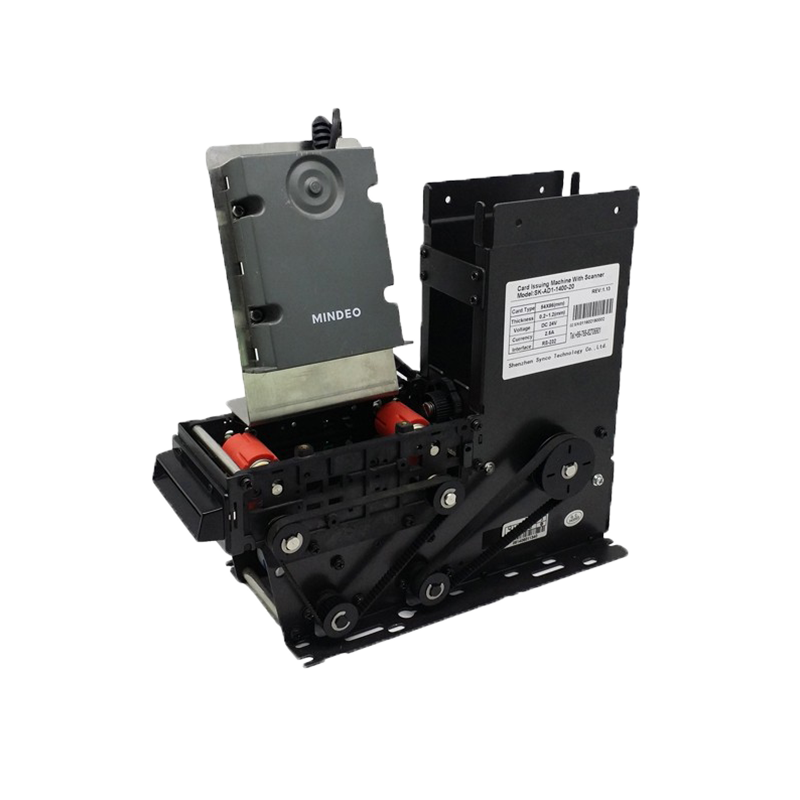
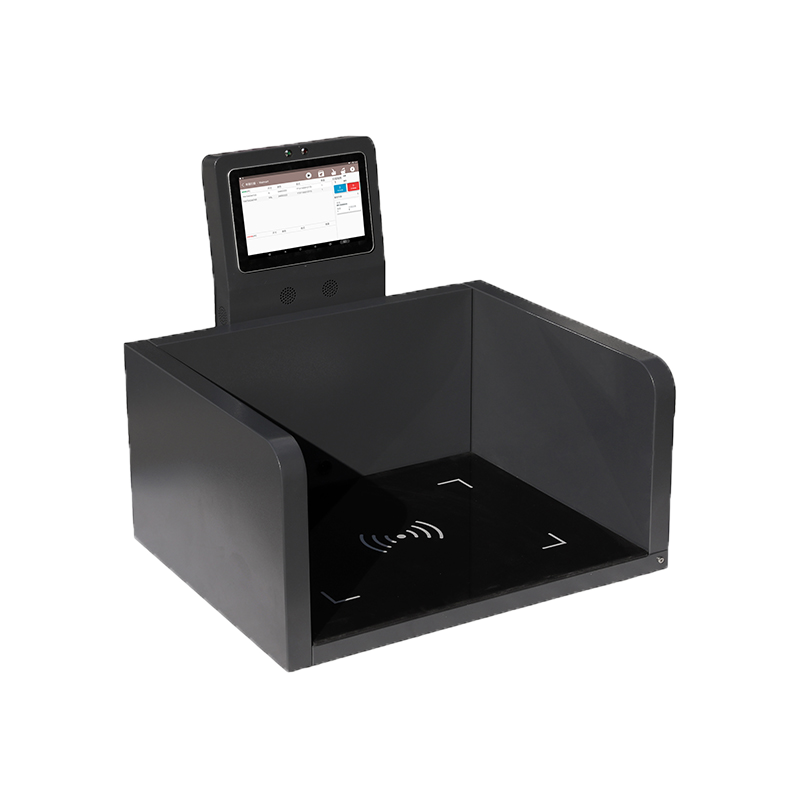
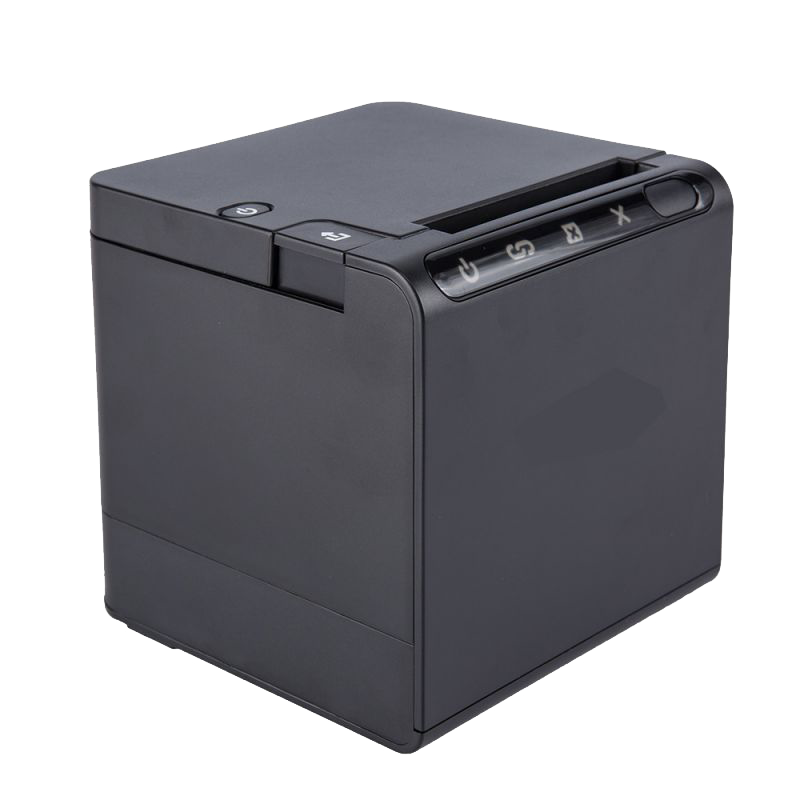
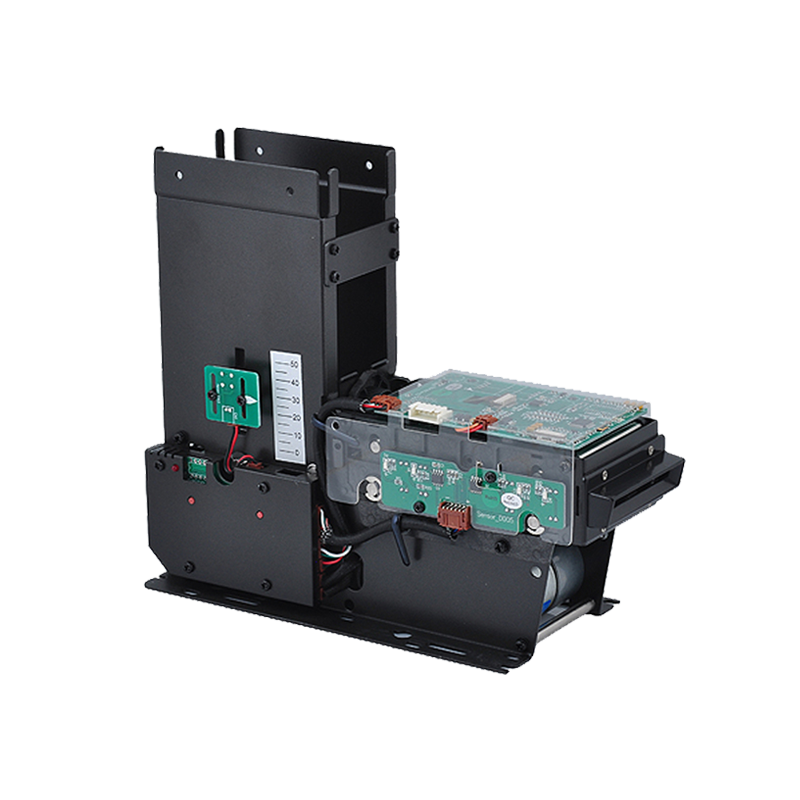
Capture multiple UHF RFID tags from cartons and packaged goods at controlled warehouse and logistics checkpoints. Syncotek provides conveyor-based, semi-automatic and enclosed RFID tunnel machines combining EPC Gen2 RFID reading, multi-antenna acquisition, mechanical transport and controlled scanning areas for warehouse, inventory and material-flow applications.
An RFID tunnel reader is a controlled UHF RFID data-capture station designed for cartons, packaged goods and other grouped inventory. Unlike a standalone fixed reader, a tunnel combines RFID hardware with antennas, enclosure design and, on selected models, conveyor and control hardware.
Read multiple UHF RFID tags inside a carton without scanning each tagged item individually.
Enclosure design and internal antenna placement create a more controlled RFID acquisition point than an open reader installation.
Selected tunnel products integrate industrial conveyor systems for automated carton movement.
Use the tunnel at defined receiving, inventory or shipping checkpoints where cartons need RFID identification.
Tunnel hardware captures EPC Gen2 RFID identifiers for use by the connected software or host system.
Equipment selection can be matched to carton dimensions, workflow, conveyor speed and integration requirements.
Start with how goods move through the facility. Continuous conveyor flow, single-box scanning and manually loaded enclosed tunnels require different equipment architectures.
An automated small-size single-box RFID tunnel using an Impinj E710 reader platform.
An industrial single-line single-box tunnel for automated carton movement through one conveyor.
A semi-automatic single-box tunnel using an electric shutter door and one conveyor.
A compact motor-driven door RFID all-in-one machine for enclosed carton scanning.
A cart-type RFID acquisition tunnel designed for motionless scanning and heavier loads.
Send the physical workflow first. Product selection should start from carton size, weight and required throughput.
Compare the tunnel architecture, carton size, load capacity and operating workflow before selecting the reader platform.
| Model | Architecture | Reader | Frequency | Tag Quantity | Read Cycle | Throughput | Conveyor | Load | Max Carton |
|---|---|---|---|---|---|---|---|---|---|
| SR-RUX237 | Automated Conveyor | E710 | 865–868 / 902–928 MHz | 200+ pcs | 3–5 s | 5–6 boxes/min | 0–30 m/min | 50 kg | 1000×750×750 mm |
| SR-RUX236 | Single Conveyor | R2000-based | 902.75–927.25 MHz | 200+ pcs / box | 3–5 s | 5–6 boxes/min | 0–30 m/min | 50 kg | 800×800×600 mm |
| SR-RUX234 | Semi-Automatic | R2000-based | 902.75–927.25 MHz | 200+ pcs | 3–5 s | Manual | One conveyor | 50 kg | 700×700×700 mm |
| SR-RUX223 | Motor-Door Box | R2000-based | 865–868 / 902–928 MHz | 200+ pcs | 3–5 s | 6–8 cartons/min | Internal rollers | — | 650×650×650 mm |
| SR-RUX221 | Cart-Type | R2000-based | 865–868 / 902–928 MHz | 200+ pcs | 3–5 s | Manual | Motionless reading | 200 kg | 850×730×900 mm |
Select the equipment based on the intended carton, tag population and workflow. Actual RFID performance should be verified with representative products, packaging and RFID tags before deployment.
The tunnel should be treated as an RFID data-capture point inside the warehouse process. It identifies the RFID tags present in the scanning area and sends those identifiers to the connected application.
Capture multiple RFID-tagged products inside a controlled carton scanning point.
Collect RFID carton data as goods enter a warehouse process.
Capture RFID data before tagged cartons continue through the outbound process.
Use tunnel scanning where cartons contain multiple item-level RFID tags.
Bulk RFID acquisition can be useful where cartons contain many tagged garments.
Add controlled RFID capture at defined carton-flow checkpoints.
Conveyor tunnel models can be incorporated into automated material-handling workflows.
RFID data can support applications that compare tagged contents with carton or order information.
Send us the maximum carton dimensions, weight, approximate RFID tags per carton, required boxes per minute, conveyor speed, operating frequency and host-system requirements.
RFID tunnel performance depends on more than the reader model. The items inside the carton, RFID tag, packaging material and tag orientation can all affect the final result.
A carton containing dry garments is a very different RFID environment from a carton containing metal, liquids or densely packed components.
Even with the same tunnel, changes in tag placement and item orientation can affect which tags are easiest or hardest to capture.
For this reason, representative project testing provides more useful information than relying on a single headline performance number.
Syncotek provides OEM/ODM support from board-level designs through complete system integration. Tunnel projects can therefore be evaluated around RFID, mechanical structure and equipment-integration requirements together.
Browse Syncotek tunnel machines, smart cabinets and application-specific RFID equipment.
View RFID Intelligent Devices →Learn how RFID read points fit into broader receiving, inventory and warehouse processes.
Explore RFID Inventory →For system integrators building custom conveyor or controlled RFID read points.
Fixed Reader Selection →An RFID tunnel reader combines UHF RFID reading with a controlled physical scanning area. Selected models also include conveyor, controller and industrial-computer hardware.
Yes. Multiple current Syncotek tunnel models publish support for reading 200+ UHF RFID tags during a scanning cycle. Real performance depends on the tags, products and packaging.
SR-RUX237 specifies an E710 reader and supports EPC Gen2 / ISO 18000-6C tags.
Both are conveyor-based tunnel products with published 200+ tag capacity, 3–5 second reading cycles, 5–6 boxes/min efficiency, 30 m/min maximum conveyor speed and 50 kg load capacity. SR-RUX237 uses an E710 reader platform and three independently controlled conveyors, while SR-RUX236 uses an R2000-based reader and one conveyor.
Yes. SR-RUX234 is a semi-automatic single-box RFID tunnel using an electric shutter door and one conveyor.
Yes. SR-RUX223 is an enclosed motor-driven door RFID machine with a published 200+ tag capacity and 3–5 second scanning cycle.
Yes. The tunnel can act as an RFID capture point in an outbound workflow. The connected software can use captured EPC data together with order or shipment information.
No. The tunnel is one RFID data-capture device. A complete warehouse solution may also include RFID tags, handheld readers, fixed read points, printers and integration with inventory software.
Use representative cartons, production RFID tags, normal packing density and the intended conveyor speed. Testing should include the products and orientations expected in the real operation.
Yes. Syncotek provides OEM/ODM services ranging from board-level design to complete system integration. Specific tunnel requirements can be evaluated according to the project.
Tell us your carton dimensions, weight, RFID tags per carton, required throughput, conveyor configuration and software-integration requirements. Syncotek can help you compare automated, single-conveyor, semi-automatic and enclosed RFID tunnel architectures.
Discuss an RFID Tunnel Project Explore RFID Intelligent DevicesIf you are interested in our services or need customized solutions, please feel free to contact us.