

Aircraft maintenance, repair and overhaul (MRO) involves more than completing technical tasks on an aircraft. Maintenance organizations must also control tools, locate serviceable components, manage inventories, document movements, and ensure the correct records are available at each stage of work. An item that cannot be found when needed can delay a maintenance task; an unaccounted-for tool requires investigation before a work area can be cleared.
Radio frequency identification (RFID) offers a way to automate selected identification and inventory events in these operations. Instead of scanning every visible barcode individually, an appropriately designed RFID system can identify multiple tagged tools or containers at a defined read point. When those events are linked to a tool-management, inventory, or MRO application, teams can maintain more timely records of what was issued, returned, received, or last detected.
RFID is an identification technology, not a substitute for approved maintenance procedures, physical tool accountability, inspection, or airworthiness decisions. Its value depends on pairing reliable hardware with a clearly defined operational workflow.
This guide covers the most practical uses of RFID in aircraft maintenance, the system architecture behind them, the differences between reader types, and the considerations that matter when specifying RFID hardware for an aviation MRO project.
RFID uses radio waves to identify an object carrying an RFID tag. In a maintenance environment, that object might be a wrench, calibrated instrument, tool trolley, spare-parts container, ground-support asset, or appropriately approved aircraft component. The tag's identifier connects the physical object to a record managed by software.
A typical system contains four elements:
Passive UHF tags do not need an internal battery to respond to a compatible reader. They are frequently considered for tool inventories, storage areas, parts bins, and controlled read points. Performance depends on the tag, mounting surface, antenna arrangement, reader configuration, and surrounding environment.
Active RFID tags have their own power source and may be used in designs that require different communication or location capabilities. Real-time location systems (RTLS) can involve active RFID, Bluetooth, ultra-wideband, or other technologies. These should not be treated as interchangeable with a passive UHF inventory reader.
A passive RFID read normally tells the system that a tag was detected at a particular read point. It does not automatically provide continuous, room-level or aircraft-level positioning. If an operation requires continuous location tracking, that requirement must be specified separately.
| Selection factor | RFID | Barcode or Data Matrix |
|---|---|---|
| Identification method | Radio-based; direct optical line of sight usually not necessary | Optical scanner must see a readable marking |
| Multiple items | Multiple compatible tags may be inventoried in one operation | Items are commonly scanned individually, depending on the imaging setup |
| Typical use | Tool cabinets, bulk audits, bins, controlled issue/return points | Individual part identification, documentation and controlled visual verification |
| Metal surfaces | Requires appropriate tag construction and placement | No RF detuning, but the mark must be accessible |
| Deployment considerations | Reader coverage, interference, tags, software and validation | Label or marking durability, scanner access and user workflow |
Many aviation operators can benefit from using both technologies. RFID is attractive for repeatable, automated inventory events, while printed identifiers and Data Matrix markings remain important for many component and documentation workflows.
Maintenance technicians use torque wrenches, sockets, screwdrivers, gauges, power tools, inspection devices, and special-purpose tooling. These assets move between tool rooms, cabinets, trolleys, workstations, and maintenance bays. A reliable tool-control process must establish which tool was issued, to whom, for which job or location, and whether it has been returned.
With RFID, each suitable tool can be assigned a unique tag identifier linked to its management record. An RFID-enabled tool cabinet, checkout point, or handheld inventory reader can then capture defined events such as present, issued, returned, or missing from an expected set.
For example, a controlled tool-room workflow might follow these steps:
The RFID layer does not by itself verify that every tool is physically accounted for. Missing tags, damaged tags, unreadable tools, and process exceptions must be addressed through documented checks and investigation procedures.
For a broader view of these architectures, see Syncotek's RFID tool tracking system and its guide to RFID tool tracking.

Foreign object debris is an important concern in aircraft maintenance. A missing socket, misplaced screwdriver, or other loose object can create a serious hazard if it remains in or near an aircraft. Tool accountability is therefore a key part of maintenance housekeeping and FOD risk management.
RFID may help teams detect a discrepancy earlier by comparing the expected tool inventory with tools identified during check-in, checkout, or a final inventory. It can also retain a record of the most recent validated issue or return event to assist an investigation.
However, RFID cannot find every foreign object, prove that a tool has been removed from an aircraft, or replace a required FOD inspection. A tag may be outside the intended read zone, shielded by metal, detached, or unreadable. MRO procedures must retain appropriate physical verification, tool reconciliation, escalation, and work-area release controls.
Aircraft maintenance requires accurate identification of spare parts and components that may move through storage, inspection, repair, testing, and return-to-service processes. Rotable components, in particular, may circulate between aircraft, shops, and warehouses over multiple service cycles.
RFID can associate a tagged container or approved tagged component with information such as a part number, serial number, stock location, repair order, or handling status. Fixed readers can capture movement at controlled receiving and dispatch points, while handheld readers can help staff locate items during inventory operations.
Crucially, identifying a part is not the same as establishing its serviceability or approved status. Maintenance, life-limit, traceability, certification, and release records must continue to be managed under the organization's applicable procedures and requirements. The tag should provide a dependable connection to those records—not replace them.
Maintenance warehouses hold components, consumables, containers, tools, and kits prepared for scheduled or unscheduled work. RFID may support receiving, bin or pallet movements, kit preparation, cycle counts, and dispatch verification.
Consider a repair job requiring a defined group of tools and components. The warehouse application can associate tag identifiers with an expected kit list, and an appropriate reader can identify tagged items at a packing or verification station. The system then flags an incomplete or unexpected set for review before dispatch.
Tagging every individual item is not always the best approach. For some workflows, tagging the container, rack, or controlled kit provides sufficient visibility at a lower implementation complexity. The correct level of identification depends on the process and traceability requirements.

Ground-support equipment (GSE) such as maintenance carts, servicing units, test equipment, and specialized fixtures can move across hangars and operational areas. RFID checkpoints may record when tagged equipment enters or leaves designated facilities, and handheld readers can support asset audits.
For large outdoor areas or requirements for frequent location updates, the project team should evaluate whether passive checkpoints are sufficient or whether an active location technology is needed. The purpose is to select an architecture based on the movement and visibility requirement, not simply on the word "tracking."
A tag can link a physical asset with its maintenance, inspection, calibration, and ownership records. For a calibrated instrument, a tool-management system might retrieve the due date at the issue point and prevent an out-of-status item from being checked out when configured to do so.
RFID itself does not perform an inspection or confirm calibration. An authorized inspection or calibration process must supply the status and supporting records. RFID helps bring that information into the workflow when the correct asset is identified.
RFID has also been considered for installed aviation components and onboard equipment identification. This is a separate category from tagging ground tools or warehouse containers because installation on aviation products or equipment may raise airworthiness, environmental, electromagnetic, and approval considerations.
An ordinary industrial RFID tag should not be represented as suitable for aircraft installation merely because it reads successfully in a workshop. Aircraft-installed applications require engineering assessment and the applicable approval path, as discussed below.
The most effective RFID system begins with a specific business event: identifying a tool at checkout, confirming a kit at packing, registering a container at receiving, or recording a part's last validated movement. Hardware and software are then chosen to capture that event reliably.

A smart cabinet can combine tagged tools, antennas, a reader or embedded module, an access-control interface, and software. Its purpose is to determine which identified items are present or have changed status as defined by the application.
Cabinets are challenging RF environments. Tools may be closely packed, metal drawer walls may shield signals, and some tags may face away from antennas. Antenna placement and tag design must be tested with a fully loaded cabinet, not just an empty enclosure or a single tool.
A cabinet design also needs logic for unauthorized removal, partial returns, power loss, duplicate read events, and tools that do not support a practical RFID attachment. These software and operating rules often determine the success of the overall solution.
Handheld readers allow a technician or storekeeper to perform inventory checks without visiting a fixed scanning station. Typical tasks include looking for a missing tagged asset, verifying a trolley or kit, checking a tool room, or conducting scheduled inventory audits.
The key selection considerations are supported frequency, operating system, application compatibility, ergonomics, tag reading performance in the actual environment, battery life, and network connectivity.
A handheld reader can reduce manual checking effort in a validated workflow, but it should not be assumed to detect every tag through all packaging, cabinets, and metal structures.
Fixed readers with external antennas can cover controlled issue counters, receiving doors, storage stations, and equipment transit points. Trigger sensors or software filters may be used to associate tag responses with movement through a defined area.
The system should distinguish the intended read zone from adjacent shelves, desks, or traffic lanes. A reader configured only for maximum detection distance could accidentally capture tags that were never part of the transaction.
A practical event flow has five stages:
Depending on the selected reader, integration may involve network connections, serial ports, GPIO, SDKs, APIs, or a system controller. Supported features vary by model and should be checked against the actual device documentation.
The data design should define ownership of each asset record, time-stamping, user permissions, failure recovery, and how an identification event becomes an auditable business event. A raw RFID scan should not automatically be treated as a completed maintenance action.
Aviation MRO includes both controlled indoor stations and large, metal-rich environments. A reader that works well at a tool counter may not be appropriate for an open hangar, densely packed tool cabinet, or warehouse doorway. Use the workflow to guide hardware selection.
| MRO workflow | Hardware approach | Primary design concern |
|---|---|---|
| Tool-room inventory | Handheld UHF reader and suitable tool tags | Reliable reads across mixed metal tools and storage positions |
| Smart tool cabinet or trolley | Embedded UHF module, dedicated antennas and application controller | Dense metal environment, read-zone isolation and item reconciliation |
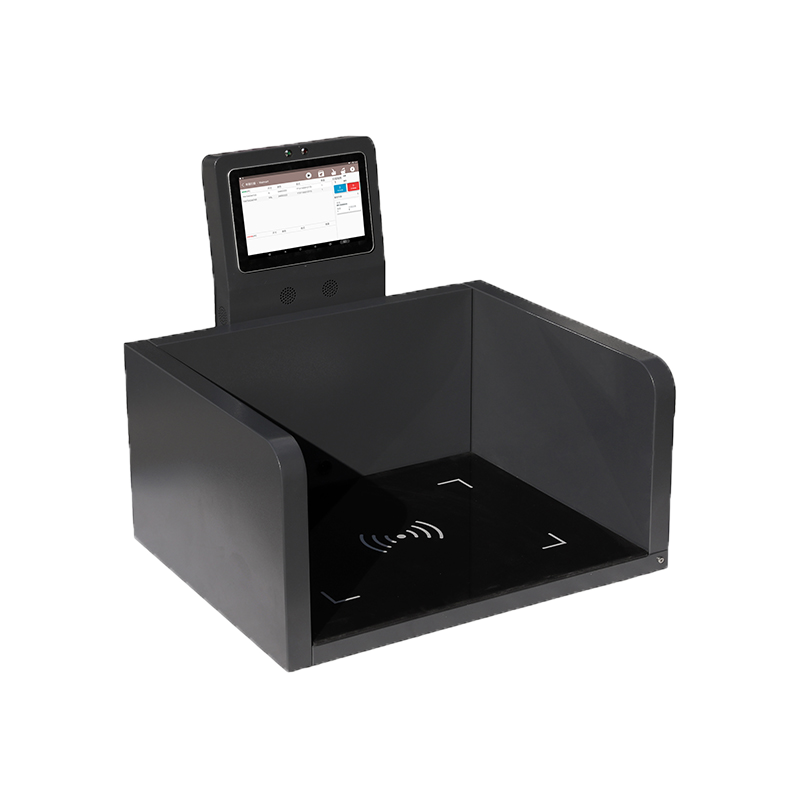
| Tool issue/return counter | Desktop or fixed reader | Defined presentation zone and transaction workflow |
| Parts warehouse doorway | Fixed UHF reader and external antennas | Correct passage detection without adjacent-stock cross-reads |
| Compact fixed checkpoint | Integrated UHF reader where coverage permits | Built-in antenna coverage, mounting and interface options |
| OEM inventory terminal | Embedded UHF module | Antenna integration, software support, power and device interfaces |
| GSE or hangar asset audit | Handheld reader or planned checkpoints | Coverage, mobility and asset movement pattern |
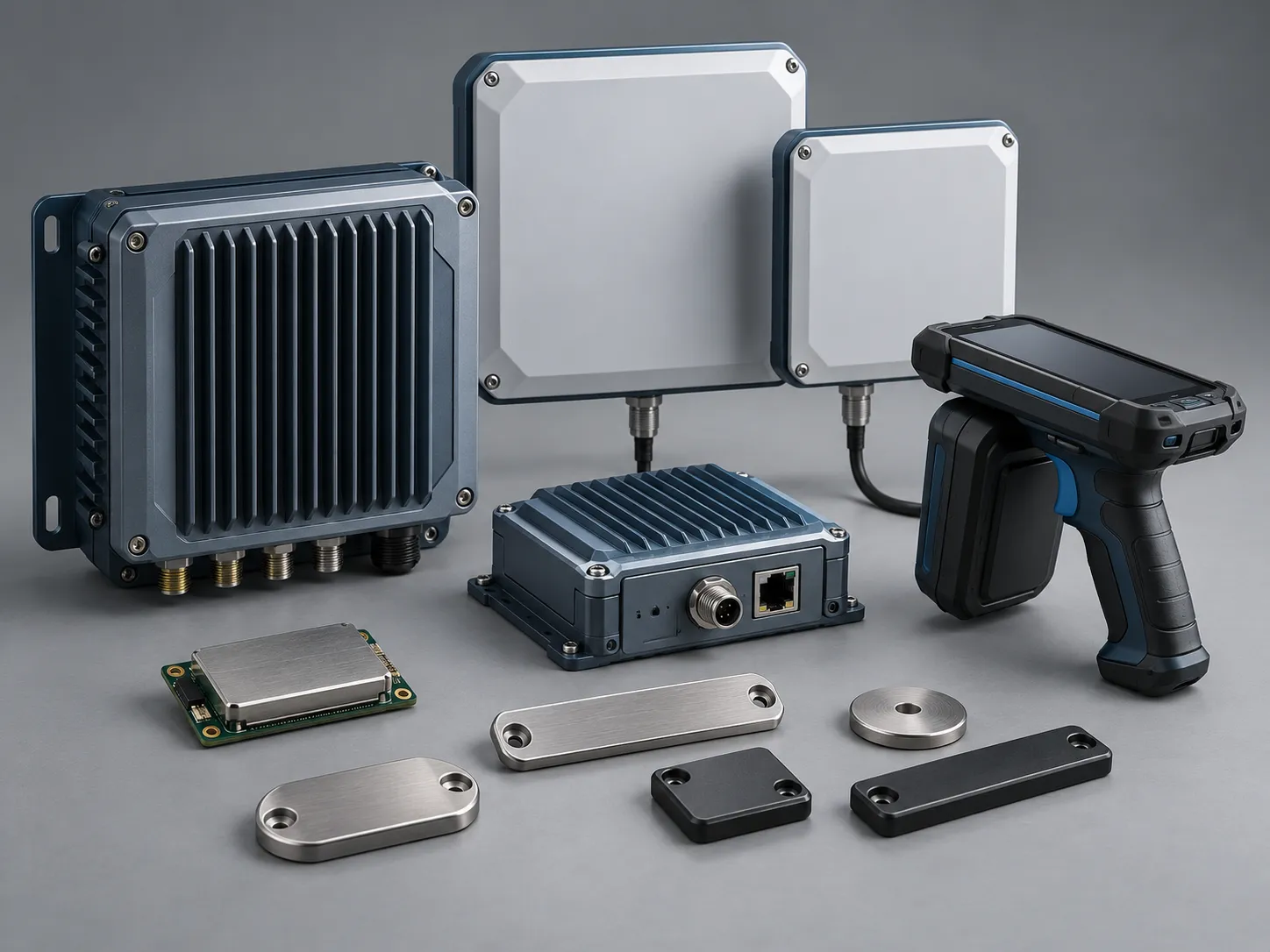
Syncotek's hardware portfolio includes UHF fixed readers, UHF integrated readers, UHF RFID modules, and UHF desktop readers. Selection should be based on actual specifications and pilot-test results rather than on a generic application label.
Many aviation tools have limited mounting space and mostly metal surfaces. Standard label inlays may perform poorly when attached directly to metal. Compact mount-on-metal UHF RFID tags are designed for this type of RF challenge, but each tool still needs an appropriate tag form factor and validated attachment method.
Review the following factors before selecting a tag:
Do not drill, machine, engrave, modify, or permanently attach a tag to a calibrated or safety-critical tool without authorization from the responsible organization or tool manufacturer. Tag retention and tool usability take priority over maximizing RFID coverage.
For fixed installations, confirm whether the objective is to read a single presented tool, everything inside a cabinet, a kit on a workbench, or containers moving through a portal. The answer determines antenna type, position, polarization, cable arrangement, shielding, and software filtering.
The system should be evaluated for both missed reads and unwanted reads. Multiple antennas can help coverage but do not automatically solve reflection, interference, or item attribution problems. Reader power should be tuned for the intended zone rather than simply set to the maximum.
Aviation maintenance hardware may face varying temperatures, moisture, cleaning products, movement, and extensive surrounding metal. Confirm the required operating ratings for the specific device and installation.
Also check the reader's network and serial interfaces, application development resources, power needs, antenna connections, and host-system compatibility. UHF frequency allocations and permitted radio configurations differ by region, so the country of deployment should be identified before choosing a model.
Aviation RFID projects involve two very different environments: ground-based maintenance and inventory operations and RFID technology installed on aviation products or equipment. Their technical, operational, and approval requirements should not be conflated.
The US Federal Aviation Administration's AC 20-162B, Airworthiness Approval of Installed Radio Frequency Identification (RFID) Tags and Sensors, provides guidance for applicants seeking airworthiness approval for installations involving passive, battery-assisted passive, and active RFID tags and sensors on aviation products and equipment.
The advisory circular describes an acceptable approach to approval, rather than making every commercial RFID device automatically acceptable for aircraft use. The appropriate engineering assessment, certification or approval responsibility, and installation conditions must be established for the specific project and jurisdiction.
A tag used only on a loose tool in a ground tool room is not necessarily subject to the same installation considerations as a tag attached to a type-certificated aircraft or component.
The ATA e-Business Program maintains Spec 2000 Chapter 9: Automated Identification and Data Capture. It addresses permanent part identification, shipping and receiving identification, and traceability, including the use of technologies such as barcodes, Data Matrix, and RFID.
Chapter 9 provides an industry context for identifying aviation objects and exchanging related information. A project team should determine which provisions are relevant to its business partners, component categories, records, and marking requirements.
Neither a generic EPC-compatible tag nor a reader's published protocol support establishes aviation installation approval or full compliance with a customer's aircraft-part traceability requirements. Those questions require project-specific review.
| Use case | Example | Main consideration |
|---|---|---|
| Ground tool tracking | Tagged torque wrench in an MRO tool room | Tool integrity, tag retention, inventory accuracy and company procedures |
| Ground warehouse tracking | Tagged parts container or storage trolley | Identification, traceability records and warehouse workflow |
| Installed aircraft component identification | RFID tag attached to an aircraft component | Applicable marking, airworthiness, installation and approval requirements |
| Onboard installed RFID sensor | Permanently installed sensor used in an aircraft application | Project-specific engineering and regulatory assessment |
Syncotek's commercial RFID hardware should be evaluated for the intended ground MRO and OEM application. No claim of FAA approval, airworthiness certification, or aircraft-installation suitability should be inferred from this article.

A tool cabinet can contain dozens of metallic objects positioned close together. Nearby metal may detune certain tags, shadow the radio path, and reflect energy. Read performance also varies when tools are stacked, rotated, or placed behind drawer walls.
A suitable test should include the smallest and most difficult tools, each approved tag placement, and the fully loaded cabinet or trolley. The project should document performance in realistic conditions rather than relying on a single demonstration read.
Reading an identifier repeatedly does not necessarily mean the tool moved repeatedly. Conversely, a tool may be present but unreadable from one antenna position. The application needs filtering, transaction logic, and an exception process so that the inventory does not change incorrectly because of raw RF behavior.
A sensible pilot records both the percentage of expected items identified and the frequency of unexpected tags entering the transaction. Set acceptance criteria for the particular workflow and evaluate them over repeated representative tests.
A tag that detaches or obstructs normal tool use can create more problems than it solves. Cleaning, vibration, impacts, tool shape, and environmental conditions should be part of the attachment assessment. Tools that cannot be tagged safely need an alternative approved identification and accountability method.
A correctly read tag is only one element of reliable tool control. User identity, issue permissions, kit definitions, calibration status, work-order association, and inventory reconciliation must all be implemented in the business system.
RFID helps capture events; it does not remove the need for clearly assigned process ownership, exception handling, or responsible sign-off.

A phased approach is preferable to attempting to tag every item in a hangar before the workflow and hardware have been validated.
Choose a narrow use case: tool checkout, cabinet reconciliation, parts receiving, kit verification, or ground equipment audits. Specify the action that should follow a read and the problem the project is intended to address.
Group assets by size, material, storage location, mobility, and attachment restrictions. List the exact points at which identification is required. Determine which items must be individually tagged and which could be tracked by container or kit.
Evaluate tag form factors, reader types, antennas, interfaces, and application support. For tool cabinets, consider embedded readers and controlled antenna placement; for tool-room audits, consider a handheld approach; for warehouse portals, evaluate fixed-reader architecture.
Test representative tools, fully loaded storage, normal working positions, nearby metal, and typical operator behavior. Include tools that are difficult to tag, moved frequently, or stored close together. Document missed and unwanted reads as well as attachment durability.
Associate tag IDs with the correct asset records. Test issue, return, overdue, missing, repair, calibration, and tag-replacement workflows as applicable. Confirm user permissions, event timestamps, and what the system does during a network outage or reader failure.
Expand only when the pilot meets agreed criteria and the tool-control or inventory team accepts the operating procedure. Document approved tag locations, reader settings, installation drawings, software rules, testing methods, and maintenance responsibilities.
RFID is used to identify and track maintenance tools, kits, spare-parts containers, warehouse assets, and selected equipment at defined checkpoints. Software connects these identification events to inventory, accountability, or MRO records.
RFID can support FOD prevention by improving tool accountability and flagging missing or unreturned tagged tools. It does not detect all foreign objects or replace inspections, reconciliation procedures, and authorized work-area release checks.
Compact on-metal RFID tags may be suitable for some metal hand tools when their size, placement, attachment, environmental durability, and read performance have been validated. A tag must not compromise tool safety or calibration.
Yes. Depending on the workflow, RFID can identify tagged containers, packaging, or approved tagged components during receiving, storage, movement, and dispatch. Serviceability and airworthiness decisions still depend on the relevant maintenance and traceability records.
Installed tags may be subject to applicable engineering and airworthiness requirements. FAA AC 20-162B provides guidance for airworthiness approval of installed RFID tags and sensors. The appropriate approval path depends on the aircraft, installation, application, and jurisdiction.
There is no universal best model. Handheld readers can support mobile audits, desktop or fixed readers can support controlled transactions, and embedded modules can be used in custom smart cabinets. The reader, antenna, tag, and software combination must be tested for the actual environment.
Readers provide tag identification events through supported device interfaces. Middleware or application software validates and associates those events with asset records, then sends relevant updates to the tool-management, inventory, ERP, or MRO system. RFID does not itself update maintenance status without the required application rules.
Aircraft maintenance RFID projects are most effective when they begin with an operational requirement: identifying a specific tool, recording a kit handoff, verifying a container, or capturing an asset movement at a defined point. From there, engineers can choose RFID tags, readers, antennas, and interfaces that fit the workflow and its constraints.
Syncotek supplies UHF RFID hardware for ground-based identification and OEM/ODM integration projects, including fixed readers, integrated readers, embedded UHF modules, and on-metal tag options. You can also review the broader RFID hardware portfolio.
To request a hardware recommendation, share the assets you need to identify, their material and available tag space, the proposed read-point layout, reader-to-tag distance, expected number of tags, environmental conditions, interface requirements, deployment country, and estimated project quantity. For aircraft-installed uses, also identify the responsible aviation engineering and approval requirements before discussing potential equipment suitability.
 Knowledge
The RFID system auto-identifies vehicles' weight, calculates net weight, and provides real-time monitoring for optimized efficiency.
READ MORE Knowledge
To read RFID means to use an RFID reader to detect a tag and retrieve data stored on it (an ID, EPC, UID, or user memory). With passive tags, the reader also provides the RF energy the tag needs to respond. The “how” depends on the RFID type: NFC / HF (13.56 MHz): very short-range […]
READ MORE Knowledge
Smart cards are used every day for payments, building access, public transportation, employee identification, hotel rooms, event admission, loyalty programs, and secure authentication. Although they often look like ordinary plastic cards, smart cards contain an integrated circuit that can store, process, or securely exchange digital information. Some smart cards must be inserted into a reader. […]
READ MORE Knowledge
RFID is often grouped into three main frequency families: LF (Low Frequency), HF (High Frequency), and UHF (Ultra-High Frequency). Picking the right band is one of the biggest decisions in any RFID project because it affects read range, speed, tag cost, phone compatibility, performance near metal/liquids, and system architecture. This guide compares LF vs HF vs UHF in a practical way […]
READ MORE Knowledge
Active RFID is a type of radio frequency identification technology that uses battery-powered tags to transmit data to RFID readers. Because the tag has its own power source, it can send signals over a much longer distance than a passive RFID tag, which relies on the reader’s signal for energy. That is why Active RFID is commonly […]
READ MOREIf you are interested in our services or need customized solutions, please feel free to contact us.