

Active RFID is a type of radio frequency identification technology that uses battery-powered tags to transmit data to RFID readers. Because the tag has its own power source, it can send signals over a much longer distance than a passive RFID tag, which relies on the reader’s signal for energy. That is why Active RFID is commonly associated with long-range identification, real-time visibility, and wide-area asset tracking.
In practical use, Active RFID is often chosen when businesses need more than simple short-range scanning. It is widely discussed in connection with vehicle tracking, warehouse visibility, equipment monitoring, staff presence detection, and RTLS-style applications where assets move frequently and need to be identified quickly across a larger area.
An Active RFID system usually includes three main parts: the RFID tag, the RFID reader, and the software or management platform. The tag is attached to an object, person, vehicle, tool, or piece of equipment. Since the tag contains a battery, it can transmit a signal on its own. The reader receives that signal and forwards the data to software, where it can be used for identification, tracking, alarms, workflow control, or reporting.
This is different from passive RFID, where the tag remains silent until it enters the field of a reader. With Active RFID, the tag can be detected over a longer distance and often with more frequent updates. That makes it suitable for projects where continuous visibility or faster event capture is important.
In many real-world systems, Active RFID tags work in one of two ways:
A beacon tag transmits its signal at set intervals. This makes it useful for real-time presence or location-style applications, because the system can keep receiving updates as long as the tag is within range.
A transponder tag only sends data when it receives a trigger or radio request from a reader. This can reduce unnecessary transmissions and may help with battery life in some deployments.
This distinction matters because many buyers search for Active RFID thinking only about “range,” but the actual system behavior also affects battery life, infrastructure design, update frequency, and software logic.
The biggest difference between Active RFID and Passive RFID is the power source.
A passive RFID tag has no internal battery. It uses energy from the reader’s electromagnetic field to respond. This makes passive tags smaller, cheaper, and well suited for high-volume applications such as product labels, access control cards, and general inventory identification.
An active RFID tag includes a battery and transmitter, so it can communicate over greater distances and support more dynamic use cases. Because of that added hardware, active tags are generally larger and more expensive than passive tags.
A simple way to compare them is this:
Top industry articles consistently present the choice in terms of range, cost, update behavior, and business objective, rather than treating one as universally better than the other.
Related Read: Passive RFID vs Active RFID: Differences, Pros/Cons, Use Cases & How to Choose
Active RFID is often associated with 433 MHz and 2.45 GHz systems. These are among the most commonly referenced frequency ranges in educational and commercial content about Active RFID.
433 MHz is often mentioned for its performance in more challenging environments, especially where there are walls, metal objects, or other absorbing materials. Some RTLS-related sources note that this band can perform well where signal propagation conditions are difficult.
2.45 GHz, part of the ISM band, is also widely used in Active RFID systems. It is common in industrial products designed for asset identification, attendance, warehousing, and mobile terminal use. Syncotek’s 2.4G product pages, for example, describe readers and tags operating at 2.45 GHz for long-range recognition and multi-tag reading.
The best frequency depends on the application, environment, infrastructure plan, and reader/tag design. Frequency should not be selected based on theory alone; it should be matched to the actual project conditions.
Read range is one of the main reasons people choose Active RFID. General industry references often describe Active RFID systems as working from tens of meters to 100+ meters, depending on the tag type, frequency, environment, antenna setup, and reader design.
In real deployments, actual distance depends on factors such as:
This is why quoted read distance should always be treated as a product capability under certain conditions, not a guaranteed result in every site.
The SR-RG2430 is described as a 2.45 GHz active reader with adjustable read range up to 50 meters and reading speed up to 200 tags per second. The SR-RG-2403 is described as a long-range active reader with adjustable effective identification distance of more than 150 meters. The SR-TG2415 asset tag page mentions effective visual recognition distance of over 200 meters, and the SR-RG2424W handheld page describes active tag recognition over 200 meters.
Most educational and solution-oriented pages on Active RFID emphasize a similar group of advantages.
This is the most obvious benefit. Since the tag has its own battery and can actively transmit, the system can cover a larger area than many passive RFID deployments.
Active RFID is frequently used where a business needs ongoing awareness of where an asset is, whether it has moved, or whether it is still inside a zone. This makes it closely related to RTLS and wide-area asset tracking.
Carts, vehicles, equipment, tools, containers, and medical devices are typical candidates because they move across space and can be expensive to lose or slow to find manually.
Many active RFID systems are designed to identify multiple tags quickly, which is valuable in busy operational environments. Syncotek’s product pages for the SR-RG2430 and SR-RG-2403 both mention multi-tag recognition up to 200 tags per second.
Active RFID is not only about reading a number from a tag. In many deployments, the data is used to automate check-in, trigger alarms, manage attendance, monitor movement, or connect to broader IoT workflows.
Active RFID also has tradeoffs, and high-ranking pages usually explain them clearly.
Because active tags include a battery and transmitting electronics, they cost more than passive tags. This makes them less suitable for very low-cost, disposable, or extremely high-volume labeling projects.
Battery-powered tags are usually bigger than passive labels or inlays. That is fine for equipment, vehicles, tools, or industrial assets, but not ideal for every item-level use case.
The battery is part of what makes Active RFID powerful, but it also adds maintenance considerations. Battery life depends on transmission interval, usage pattern, and design.
Long-range systems still need correct reader placement, tag selection, and software logic. For wide-area projects, infrastructure design matters just as much as the reader specification.
Active RFID is most valuable when the item being tracked is important, mobile, or expensive to locate manually.
This is one of the most common Active RFID use cases. Businesses use it to track reusable assets such as tools, laptops, carts, industrial equipment, test devices, and containers.
Syncotek RFID products
In warehousing, Active RFID can support movement monitoring, zone-based visibility, and faster identification of mobile assets. It is especially useful when manual searching creates delays. Syncotek’s product pages for the SR-RG2430 and SR-TG2415 list warehouse inventory or warehouse management among their applications.
Maybe you like:
Vehicle identification is another common use case for Active RFID because vehicles need to be recognized at a distance and often while moving. This can support parking control, yard management, plant logistics, and automated industrial workflows. Syncotek’s 2.4G active reader pages include vehicle management among the stated applications.
Product Recommend
Hospitals and medical facilities often need to locate movable equipment quickly. Active RFID is often discussed for medical device visibility, and Syncotek’s SR-TG2415 page specifically mentions medical device management.
Some Active RFID systems are designed for attendance, presence, or zone-based identification where users do not need to present a card at close range. The SR-RG2430 application section includes staff attendance among its uses.
When staff need portable identification tools, handheld active RFID terminals can be useful. Syncotek’s SR-RG2424W is positioned as an industrial handheld terminal supporting 2.4G active tag recognition, GPS, 4G, Wi-Fi, and Android-based field use.
Suggested internal link:
When evaluating an Active RFID project, it helps to start with the application rather than the product name.
The best candidates are usually assets that are mobile, valuable, reusable, or time-consuming to find manually.
Some projects only need tens of meters. Others need over 100 meters. The answer affects reader type, tag type, installation plan, and budget.
A system designed for periodic identification is not the same as a system intended for near-real-time visibility. This affects tag behavior, battery life, and software logic.
Metal objects, walls, open yards, warehouses, hospitals, and production plants all behave differently. Frequency and reader placement should be chosen with the environment in mind.
Some projects work best with fixed readers at doors or zones. Others need handheld verification for field work. Some need a mix of both.
Active RFID is best understood as a solution for longer range, faster visibility, and better tracking of mobile or high-value assets. It is not meant to replace passive RFID in every situation. Instead, it serves a different role: projects where range, real-time awareness, and operational responsiveness matter more than ultra-low tag cost.
 Knowledge
Choosing an RFID tag should not begin with a catalog, chip model, or maximum advertised read distance. It should begin with the physical object and the workflow. The right RFID tag for a cardboard carton may fail when attached to a metal tool. A tag that performs well with a fixed reader and high-gain antenna […]
READ MORE Knowledge
The RFID system auto-identifies vehicles' weight, calculates net weight, and provides real-time monitoring for optimized efficiency.
READ MORE Knowledge
An RFID reader and writer is a device that can both read data from RFID tags and write new data into compatible RFID tags. In many RFID projects, this type of device is also called an RFID reader-writer, RFID read-write device, or simply an RFID writer. The “read” function allows the device to detect RFID tags and collect stored information […]
READ MORE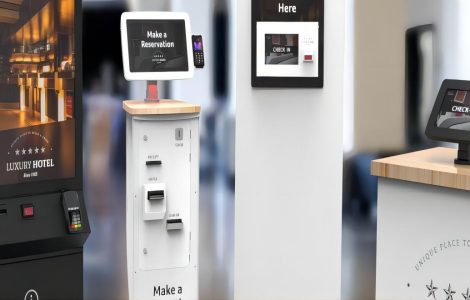 Case Show
Card dispensers for Hotel Self-Check-in Kiosk
READ MORE Uncategorized
RFID printers play an important role in RFID deployment because they combine two tasks in one workflow: printing visible information on a label and encoding digital data into the RFID inlay inside the label. For many businesses, RFID printing is the bridge between traditional barcode labeling and automated RFID identification. A properly selected RFID printer […]
READ MOREIf you are interested in our services or need customized solutions, please feel free to contact us.