

ARC RFID certification is a common phrase used by buyers and suppliers looking for RFID tags that meet major end-user requirements. In practice, the Auburn University RFID Lab ARC Program is more specific: it defines application-based performance specifications, benchmarks passive UHF RFID inlays against those specifications, and publishes approved inlay lists. A separate ARC Quality Certification program evaluates the quality management systems of inlay manufacturers, while ALEC Validation checks whether a supplier's finished product and tagging process meet an end user's requirements.
Understanding these differences matters when a retailer, brand owner, logistics operator, or manufacturer specifies an ARC-approved RFID inlay. A tag that works in one application is not automatically suitable for another. The required Spec, inlay model, finished label construction, tag placement, encoding, and deployment environment all need to be considered.
This guide explains how the ARC Program works, how to find approved RFID inlays, what ARC Quality Certification covers, how supplier validation fits into the process, and how to select compatible RFID equipment for a deployment.

The ARC Program is operated by the RFID Lab at Auburn University. Founded in 2009, it provides a common way for end users and suppliers to define and communicate passive UHF RFID inlay requirements across the RFID ecosystem.
The program supports end users in areas including retail, aviation, manufacturing, and transportation. Rather than treating every RFID inlay as interchangeable, ARC connects the required performance to the end user's application, product or packaging, operating environment, and RFID infrastructure.
The term "ARC-certified RFID tag" is widely used in commercial discussions. However, it is important to use the official terminology accurately:
An approved inlay is not automatically approved for every application, and manufacturer quality certification is not the same as approval of every inlay model. Suppliers should always check the exact requirement in the end user's RFID playbook and the current Auburn database.
For the program's scope and operating model, see the Auburn RFID Lab ARC Program overview.
An RFID tag may perform well in a simple bench test but behave differently when attached to a real product, placed inside packaging, stacked with other items, or read in a busy portal. Materials, orientation, tag dimensions, antenna design, reader configuration, and the surrounding RF environment can all affect performance.
ARC provides a structured way to define performance expectations for a specific use case. This helps end users communicate requirements to suppliers and compare inlays against a shared benchmark.
ARC approval can help a project in several ways:
ARC approval does not guarantee perfect reads in every reader installation. It should be treated as an application-specific benchmark, not a universal guarantee that a tag will work at every distance, orientation, or site.
The ARC process begins with the end user's application rather than with a supplier choosing a tag from a catalogue.

The end user explains what needs to be identified and how RFID will be used. Relevant details may include:
The same inlay may behave differently on a garment, a shoe box, a plastic container, or a product containing metal or liquid. This is why the end user's actual use case matters.
The end user works with Auburn to define the performance and quality requirements for the deployment. ARC refers to these requirements as a Spec.
A Spec is not simply a generic label for an industry. It describes performance thresholds developed around the use case and the conditions relevant to the deployment. Suppliers should not guess which Spec applies based only on a broad category such as retail or logistics.
The end user's RFID playbook or direct instruction should identify the required Spec. If the requirement is unclear, ask the end user to confirm it before purchasing or converting labels.
The RFID Lab benchmarks inlays against the relevant Specs. The results are stored in the ARC database as performance and quality profiles.
The purpose is to determine whether an inlay meets the thresholds defined for a particular use case. An inlay that meets one Spec is not automatically approved for another Spec with different performance requirements.

Auburn publishes Approved Inlay Lists for the Specs that have approved inlays. The public database provides information such as the inlay manufacturer, model, chip or silicon, dimensions, and applicable Spec.
The official database is the source suppliers should use when checking an inlay. Start with the ARC Approved Inlay Lists, then open the relevant Spec list and confirm the exact model.
The approved inlays for an end user's application are communicated to suppliers through the end user's RFID playbook or other project requirements.
A supplier should record the required Spec, approved inlay manufacturer and model, tag location, encoding rules, label construction, and any validation steps. This information should be shared with the label converter, printer operator, RFID equipment provider, and relevant production teams.
An ARC Spec is an application-specific set of performance requirements for passive UHF RFID inlays. Specs take into account the end user's use case, product or packaging types, environment, and RFID infrastructure.
There is no safe way to select a Spec solely from a short industry label. Two products in the same industry may have different physical materials, packaging, tag locations, and read processes. Those differences can affect the required performance.
A supplier may be asked to provide RFID-tagged products for a retailer, brand owner, airline, manufacturer, or logistics customer. The customer may have already selected a Spec based on its own deployment and infrastructure.
The supplier should therefore:
If the playbook names an inlay model directly, do not replace it with a visually similar model without written approval. Different antenna designs, dimensions, chips, and finished constructions can change performance.

Yes. The official ARC database includes inlays that appear under more than one Spec. This does not mean that every inlay is approved for every application. It means that the specific model has been listed for the particular Specs shown in the database.
When comparing candidates, check the exact model and all of its listed Specs. Do not infer approval from a similar product name, chip family, antenna shape, or manufacturer.
Check the live Auburn database when a new project begins, when an end user updates its playbook, and before a production change. Approved lists and Spec documents can be updated. A saved spreadsheet or an old article may not reflect the current published information.
The ARC Spec documents and the live Approved Inlay Lists should take precedence over static third-party summaries.
These terms are related, but they address different questions.

Performance approval concerns a specific inlay model and a specific Spec. The question is:
Does this inlay meet the performance thresholds for the intended application?
An inlay can appear on an approved list for one or more Specs. Buyers should check the exact model, not just the manufacturer's name.
ARC Quality Certification evaluates the inlay manufacturer's quality management system (QMS). The question is:
Can this manufacturer consistently produce inlays that maintain the required performance over time and at production volume?
According to Auburn, the program reviews the manufacturer's internal QMS practices through a multi-step process that includes site visits. It focuses on critical aspects of RFID tag design and manufacturing. The program does not simply impose a separate external QMS; it audits how the manufacturer manages quality in its own production system.
This distinction matters because a successful laboratory result for one inlay model does not, by itself, demonstrate that every production batch will remain consistent. Product performance and manufacturing consistency are separate concerns.
See the official ARC Quality Certification process for the current program description and manufacturer information.
No. Manufacturer-level quality certification should not be interpreted as automatic performance approval for every inlay model or finished label.
A buyer still needs to confirm that the exact inlay model appears on the approved list for the required Spec. The finished product may also need to meet the end user's placement, encoding, and submission requirements.
A common source of confusion is the difference between an approved inlay and a finished RFID label attached to a product.
An inlay is the RFID component that includes the chip and antenna. A finished label may add a face material, adhesive, liner, printing, converting process, and a specific shape or placement. The finished label is then applied to a product or package.
Even when the inlay is approved for a Spec, the supplier must still follow the end user's requirements for the finished tag and its use.
Auburn's ALEC Validation is a submission program designed to check whether product suppliers meet their end user's RFID requirements. The process can validate the approved inlay, tagging location, encoding, and other specified requirements.
This is different from ARC inlay benchmarking and different from ARC Quality Certification:
The current Auburn process describes the following sequence:
Always read the current ALEC Validation instructions before preparing a submission. Requirements can be specific to the end user and may change.

ARC and GS1 EPC Gen2 address different parts of an RFID project.
GS1 EPC Gen2 defines the UHF RFID air-interface protocol: how compatible readers and tags communicate over the radio interface. The current GS1 reference publishes the EPC Radio-Frequency Identity Generation-2 UHF RFID Standard, including version 3.0.1, ratified in February 2026. ISO/IEC 18000-63 defines Type C air-interface parameters for RFID communications in the 860 MHz to 930 MHz range.
ARC, by contrast, provides application-based performance specifications and benchmark information for passive UHF RFID inlays.
| Topic | GS1 EPC Gen2 / ISO/IEC 18000-63 | Auburn ARC Program |
|---|---|---|
| Main purpose | Defines the UHF RFID air-interface communication protocol | Defines and benchmarks application-specific inlay performance requirements |
| Focus | Reader-tag communication and protocol behavior | Inlay suitability for a defined end-user use case |
| Typical question | Can the reader and tag communicate using the required protocol? | Does this inlay meet the performance thresholds for the required Spec? |
| Project role | Establishes protocol-level compatibility | Helps select and communicate application-approved inlays |
A tag can support EPC Gen2 and still fail to meet a particular ARC Spec. Conversely, an inlay's appearance on an ARC Approved Inlay List does not remove the need to confirm that the reader, regional frequency settings, encoding process, and software are compatible with the deployment.
For current protocol information, refer to the GS1 EPC Gen2 standard and the ISO/IEC 18000-63 standard.
Choosing an inlay should be a documented process. Do not select a tag based only on price, chip model, physical size, or a supplier's general statement that it is ARC certified.
Request the current RFID playbook or written specification. Confirm the exact Spec and whether the customer has named approved manufacturers or inlay models.
If the customer has not provided a Spec, ask for clarification. Do not assume that a Spec used for another customer or product category will also apply.
Open the Auburn Approved Inlay Lists and select the required Spec. Check the exact manufacturer and model.
Record the details that matter to purchasing and production:
A similar model name is not sufficient evidence of approval.
The inlay is only one part of the finished label. Confirm the face stock, adhesive, liner, label dimensions, printing, converting process, and how the label will be attached to the product.
A change in construction or placement may affect how the tag performs. If the end user specifies a particular finished label or converter, follow that requirement.
Tag placement is part of the application, not a minor production detail. Confirm where the tag must be applied, its orientation, distance from product materials, and whether it must be placed on a particular panel or surface.
For products containing metal, liquid, dense materials, or unusual packaging, test the complete product configuration rather than assuming that an inlay's general performance will transfer unchanged.
Check the end user's encoding rules, including the required identifier structure, item-level uniqueness, data format, and any printing requirements. Make sure the encoding process is compatible with the customer's information system and verification workflow.
A correctly selected inlay can still create compliance problems if labels are encoded incorrectly, duplicated, or associated with the wrong product record.
Before mass production, test samples using the intended label construction and placement. Evaluate the product at the actual read points and with the intended reader and antenna configuration.
Test representative product variations, packaging, orientations, and stacking conditions. Record the setup and results so that the production process can be repeated.
If the end user requires ALEC validation, follow the current submission instructions. Prepare the required product samples, tag details, placement information, encoding data, and supporting documentation.
Do not assume that an approved inlay alone completes the supplier's compliance obligation.
ARC requirements focus on inlay performance and end-user application requirements, but suppliers still need suitable equipment to encode, read, verify, and manage RFID-tagged products.
The equipment should be selected around the actual workflow and the customer's requirements.

An RFID printer-encoder can print visible label information and encode the RFID chip in one production process. It may be used for source tagging, product labeling, and supplier compliance workflows.
When selecting a printer, confirm:
A printer's ability to encode a label does not by itself establish that the label meets an ARC Spec. The inlay and finished label still need to match the customer's requirement.
Desktop readers can support sample encoding, EPC checks, commissioning, and controlled verification at a workstation. They are useful for checking individual labels during setup and quality-control processes.
Confirm that the reader supports the required protocol, tag IC features, software interface, and encoding workflow.
Fixed readers and antennas can be used at production lines, packing stations, conveyor points, and shipping checkpoints. Antenna placement and polarization should be selected for the read zone and product movement.
For repeatable verification, document the reader power, antenna configuration, tag orientation, read distance, and test conditions. A result obtained with one setup should not be assumed to apply to a different installation.
Handheld readers can help operators inspect tagged products, check inventory, and investigate missed reads. They are also useful during pilot deployments because the operator can vary the angle, distance, and orientation while checking the product.
Handheld testing is useful for troubleshooting, but it should not replace a controlled validation process when the end user requires one.
A supplier's RFID workflow may connect printers, readers, antennas, handheld devices, middleware, ERP, WMS, and production systems. Make sure that each step preserves the relationship between the product identifier, EPC, label, and business record.
Explore Syncotek RFID readers, modules, antennas, tags, and RFID printers for hardware options. For supplier workflows involving tagging, encoding, and verification, see RFID Tag Mandates for Suppliers.
Syncotek's published portfolio includes UHF tags, reader modules, fixed and desktop readers, handheld devices, antennas, and POSTEK RFID printers. This describes the available product categories; it should not be interpreted as a claim that a particular Syncotek tag model is ARC-approved. Buyers should verify the exact inlay manufacturer and model against the current Auburn list and their end user's playbook.
Use this checklist before placing a production order or starting a supplier tagging project.
| Checkpoint | What to Confirm |
|---|---|
| End-user requirement | Current RFID playbook or written specification received |
| Required Spec | Exact Spec confirmed by the end user |
| Approved inlay | Exact manufacturer and model listed for that Spec |
| Product construction | Face stock, adhesive, label size, and finished construction confirmed |
| Tag placement | Location and orientation match the end-user requirement |
| Encoding | EPC structure, uniqueness, and data rules confirmed |
| Equipment | Printer, reader, antenna, and software support the workflow |
| Sample testing | Actual products and packaging tested under representative conditions |
| ALEC | Submission completed if required by the end user |
| Production control | Approved materials, settings, and process documented |
| Change control | Inlay, label, placement, or encoding changes reviewed before production |
ARC is an application-based program. Approval for one Spec does not mean an inlay is suitable for every product, package, or deployment.
A model's performance approval and a manufacturer's QMS certification are different. Check both when the end user's requirements call for them.
Manufacturer-level quality status does not automatically place every model on every approved list. Verify the exact inlay model and Spec.
EPC Gen2 describes reader-tag communication. ARC addresses application-specific inlay performance. One does not replace the other.
A visually similar inlay may have a different antenna, chip, dimensions, or performance profile. Obtain end-user approval before making a substitution.
The final label, adhesive, placement, packaging, and product material can affect performance. Test the complete product configuration and follow the customer's validation process.
ARC RFID certification is a common industry phrase for the Auburn University RFID Lab's ARC Program and its approved inlay process. The program defines application-specific Specs, benchmarks passive UHF RFID inlays, and publishes approved inlay lists. Auburn also operates a separate ARC Quality Certification program for inlay manufacturers.
The ARC Program is operated by the RFID Lab at Auburn University. The lab publishes Spec documents and Approved Inlay Lists based on its benchmarking process.
An ARC Spec is a set of performance and quality requirements defined around an end user's application. It can consider the product or packaging, operating environment, use case, and RFID infrastructure. The correct Spec should come from the end user's playbook or written instructions.
ARC-approved refers to an inlay model listed for a particular Spec after benchmarking. ARC Quality Certified refers to the manufacturer's quality management system being evaluated through the ARC Quality Certification process. One is model- and Spec-focused; the other is manufacturer-focused.
The public ARC Approved Inlay Lists identify inlay models. A finished RFID label includes additional materials and converting steps, and the supplier may also need to meet end-user requirements for placement and encoding. ALEC Validation can check the submitted supplier product against those requirements.
Yes. Some inlay models appear on more than one Spec list. Check the exact model in the current Auburn database and confirm that the required Spec is included.
No. ARC approval indicates that an inlay has met the applicable Spec's benchmark requirements. Actual performance in a deployment also depends on the finished label, product material, placement, orientation, reader, antenna, RF settings, and environment.
No. GS1 EPC Gen2 and ISO/IEC 18000-63 define UHF RFID air-interface communication. ARC provides application-specific performance specifications and approved inlay information. A project may need to satisfy both protocol and application requirements.
Obtain the end user's required Spec, open Auburn's current Approved Inlay Lists, select the relevant Spec, and verify the exact manufacturer and inlay model. Do not rely only on old lists or a supplier's general claim.
ALEC Validation is Auburn's submission process for checking whether a supplier's product meets end-user RFID requirements. The published process includes checking the approved inlay, tagging location, encoding, and other requirements using submitted product samples.
Not necessarily. Whether ALEC Validation is required depends on the end user's program and supplier instructions. Suppliers should follow the current RFID playbook and confirm the requirement with their customer.
Only if the exact inlay meets the required Spec and the finished product satisfies the end user's other requirements. EPC Gen2 compatibility or a general read-range specification alone does not establish ARC approval.
An ARC-based RFID project requires more than selecting a tag from a product catalogue. Suppliers need to confirm the required Spec, verify the approved inlay, follow the customer's tagging and encoding instructions, and test the finished product using a suitable reader and antenna setup.
Syncotek provides UHF RFID reader modules, integrated and fixed readers, desktop readers, handheld devices, antennas, tags, and POSTEK RFID printers for different identification and encoding workflows. The right combination depends on the product, tag construction, read point, production volume, regional frequency requirements, and software integration.
Explore the Syncotek RFID product portfolio or contact Syncotek to discuss reader selection, RFID printer integration, antenna configuration, and OEM/ODM requirements.
When an end user specifies ARC approval, always verify the exact inlay model and required Spec in the current Auburn database. Do not assume that a reader, printer, or tag is ARC-approved simply because it supports UHF RFID.
 Knowledge
HF RFID (High-Frequency Radio Frequency Identification) is a widely used RFID technology operating at 13.56 MHz. It’s best known for short-range, controlled reads, strong support for secure credentials, and the fact that NFC is built on the same HF band. If your project needs a tap / close-range user experience—like access control badges, library book tags, healthcare wristbands, or secure ID cards—HF […]
READ MORE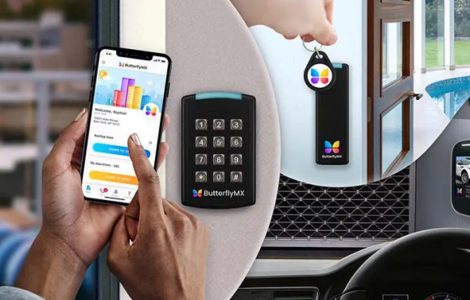 Industry Info
How to Choose Frequency for Your Access Control System
READ MORE Knowledge
Businesses often know how many assets they purchased but have much less visibility into where those assets are, who is using them, whether they are available, when they were last inspected, or whether they still exist. The problem appears across many industries. A manufacturer may need to manage thousands of tools and fixtures. An IT […]
READ MORE Knowledge
UHF RFID systems use radio waves to communicate between readers, antennas, and passive RFID tags. In a small installation with one reader, radio-frequency interference may be relatively easy to control. In a warehouse, factory, retail store, distribution center, or event venue with several readers operating at the same time, the RF environment becomes more complicated. […]
READ MORE Knowledge
Can an RFID tag tell you exactly where an asset is right now? The correct answer is: Sometimes — but it depends completely on the RFID architecture. Not every RFID tracking system is a real-time locating system. A passive UHF RFID system may tell you: Asset A was detected at Warehouse Door 3 at 14:42. […]
READ MOREIf you are interested in our services or need customized solutions, please feel free to contact us.